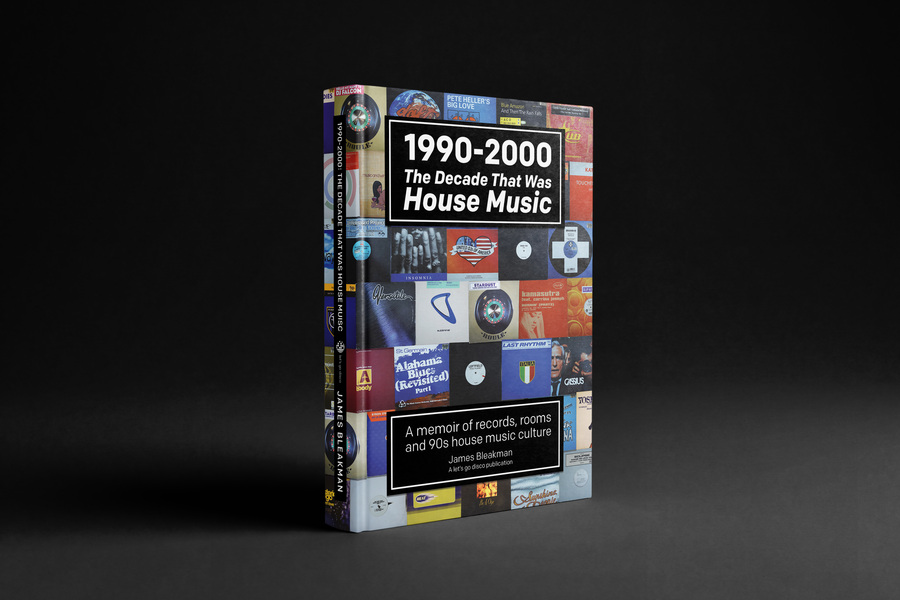
Written by James Bleakman and published by let’s go disco, 1990–2000: The Decade That Was House Music is a new book that offers an ordinary fan’s perspective on a defining decade of house music.
Beginning with a cassette left behind by his older brother, James Bleakman’s new memoir explores how radio, magazines, record shops, mix compilations, clubs and bedroom decks shaped one fan’s relationship with house music.
Bleakman’s route into house music began by chance. In 1995, his older brother left a cassette in his stereo containing Pete Tong’s Essential Mix on BBC Radio 1, broadcast live from the Que Club. Crescendo’s Are You Out There emerged through the cheers and whistles of the crowd, offering an unexpected glimpse into a culture that still felt beyond reach.
“The track mattered, but the crowd around it mattered just as much,” he explains. “For the first time, music felt less like something I simply listened to and more like a place I wanted to enter.”

The discovery began a journey through radio, magazines, record shops, clubs and bedroom decks to the other side of the DJ booth.
History from the dancefloor
Most dance-music histories document the DJs, artists, promoters, clubs and labels that created the culture. 1990–2000 takes another position. It is not a definitive history or celebrity-DJ autobiography, but the experience of someone receiving the culture from the outside.
“I was one of the countless people hearing the records, reading the magazines and filling the dancefloors,” says Bleakman. “Most dance-music books tell the stories of the people who made the scene. I wanted to preserve something of what it meant to be one of the people who lived it.”
The memoir recognises the defining artists and records of the decade, but filters them through an experience shared by many people who were deeply invested in house music without becoming household names.
Finding a place within the culture
The narrative follows Bleakman from listener and clubber to record buyer, bedroom DJ and eventually working DJ. It began not with a career plan, but with a desire to move closer to the experience first encountered through that cassette and later felt on the dancefloor.
“Records had to be found, carried home and learned,” he says. “The bedroom became a private training ground where progress was measured through small breakthroughs: holding two records together or finally making a transition feel natural.”
Moving into bars and clubs meant learning to read a crowd and shape a shared room.
“The journey was never solely about becoming a DJ. It was about finding a place within the culture. DJing gave me a way to participate in something that had already transformed the way I listened, socialised and understood myself.”

Before unlimited access
The decade unfolded before digital abundance changed discovery. Information travelled through radio, specialist magazines, record shops, flyers, cassettes and word of mouth. A title, label or half-remembered lyric might be the only clue to a track.
“You could not hear everything, so what you found often mattered enormously,” says Bleakman. “A record carried a different significance because of the effort involved. Discovery felt active rather than automatic.”
Magazines connected readers to distant scenes, radio brought the culture into bedrooms, and record shops offered an education through recommendations, conversations and the gradual recognition of labels and producers.
Mix compilations as substitute pilgrimages
Before archived sets and tracklists were instantly available, a mix compilation could make a distant club feel accessible. Repeated listening revealed how a DJ built tension, changed direction and created a journey.
“A great mix compilation felt like someone had opened the door to a club and let you hear the night from inside,” says Bleakman. “You learned every transition, every breakdown and every point where the mix seemed to lift, darken or open out.
“They taught me that DJing was not simply about choosing good records. It was about sequence, tension, timing and creating movement across an entire set. They were not just purchases. They were substitute pilgrimages.”

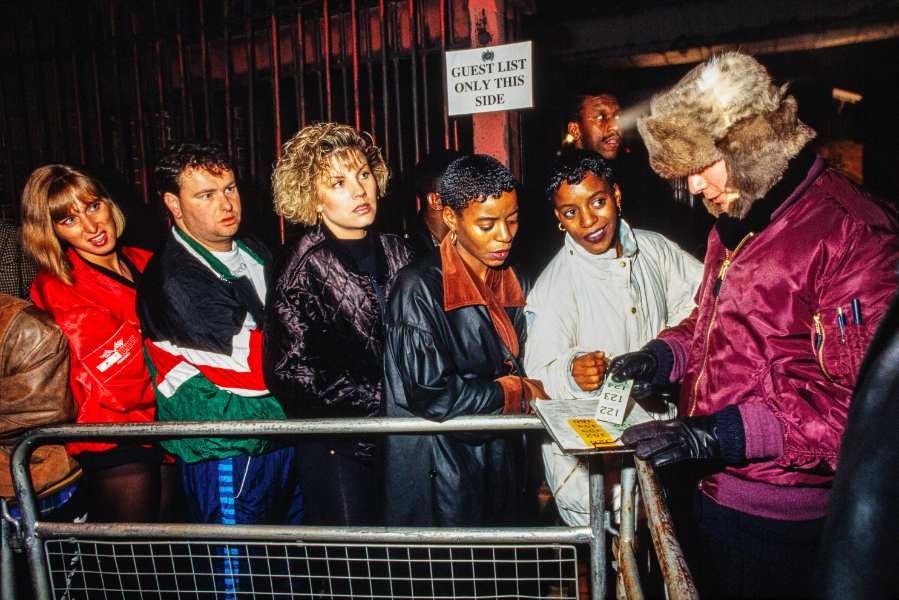
As club culture expanded, the compilation changed. At its best, it documented a room, resident DJ or musical identity. Successful club operators also recognised that a club name could become a media business reaching far beyond its dancefloor.
That growth introduced millions of people to dance music, but it also shifted some compilations towards packaging a broadly recognisable version of club culture. The compilation became not only a portal into a club, but a branded commercial product.
What the decade left behind
The final chapter of the book considers what has changed since the decade ended. It does not argue that contemporary dance music lacks creativity or that everything was better in the past. Technology has widened access and provided remarkable creative tools. The question is more personal: which qualities remain worth protecting?
Long-form records and patient mixing have not disappeared, although they often occupy a less visible part of contemporary dance culture.
“I still gravitate towards records that have time to unfold, with intros and outros built to be mixed, blended, teased and trusted,’ says Bleakman. “I love the slow burn, the careful transition and the sense of being guided somewhere over time.
“That way of playing has not vanished. You just sometimes have to look a little harder to find it.”
The more significant change may be how those moments are experienced.
“In the 90s, if you were in a room, you were in the room,” he adds. “No phones, no instant posts and no filming the drop for people who were not there. The experience lived and died in the moment, and that gave it power. Now the moment is often split between being lived and being captured. Something is lost in that split.”
The book makes a case for patient mixing, smaller rooms, slower discovery and the freedom to experience something without documenting it, he says.
“This is not an argument against technology. Access is broader, creative possibilities are greater and music can now travel instantly. But I still think there is value in anticipation, in searching and in allowing a night or a record to reveal itself gradually.”
A tape. A flyer. A record. A magazine. A shop conversation. A friend saying, ‘You need to hear this’. Those things took longer to travel, but they often carried more weight when they arrived.
Preserving the evidence
Records, magazines, flyers, photographs and memorabilia became evidence of how the culture reached people before every experience left a digital trace.
“The archive material is not there simply to decorate the story,” says Bleakman. “These objects are part of the story. They show how the music was discovered, communicated, collected and remembered.”
An illustrated Collector’s Edition hardback of the book will bring that archive together with the complete memoir. It is also planned to include an expanded epilogue, 2000–2010: The Second Underground, following James’s relationship with house music beyond the early-2000s superclub peak and into the smaller rooms, independent labels and deeper sounds that shaped the latter part of the decade.
Frank Broughton and Bill Brewster, authors of Last Night a DJ Saved My Life: The History of the Disc Jockey, described the book as, “An insightful and elegantly written memoir of a typical ’90s house fan’s evolution from inspired clubber to working DJ. James Bleakman gives us an evocative analysis of his social and cultural journey from bedroom to club.”
Their response captures the project’s intention to preserve not only the music and events, but the individual journey created around them.
1990–2000: The Decade That Was House Music is released on 1 September 2026 in ebook and audiobook formats. The illustrated Collector’s Edition hardback is in development and planned for later in 2026.
Explore the book, hear selected audiobook extracts and discover the wider project:
let’s go disco
Read the ebook:
Books2Read
Amazon UK
Listen to the audiobook:
Apple Books
Storytel
All images supplied courtesy of James Bleakman / let’s go disco.
About Post Author