The rise of social media has breathed new life into legacy artists, with Kate Bush’s Running Up That Hill and Fleetwood Mac’s Dreams among the tracks to experience a viral resurgence. More recently, this social media phenomenon has also extended into the garage and bassline scene.
Originally released in the mid-2000s, Delinquent’s My Destiny has become one of this year’s viral TikTok sensations, racking up more than 11 billion views, and counting, from tens of millions of posts. On the back of its renewed popularity, the track was re-released earlier this year by Robots + Humans in association with Ministry of Sound and Sony Music Entertainment – check it out here.
As a result, Delinquent, now performing as Mike Delinquent and KCAT, have seen My Destiny reach audiences across three generations of music fans, while the track’s revival has also taken on a personal significance for the couple, who have two neurodivergent children, one of whom is non-verbal and autistic.
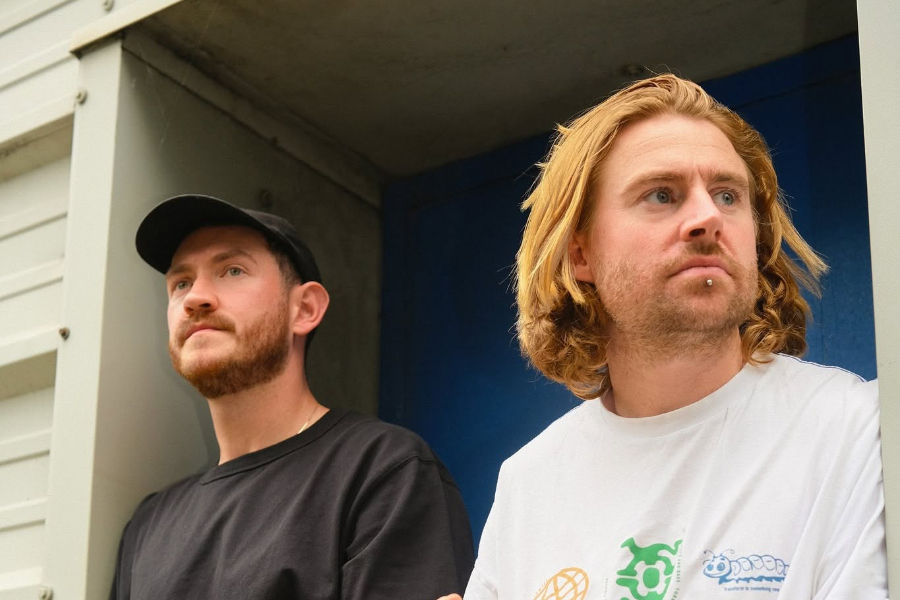
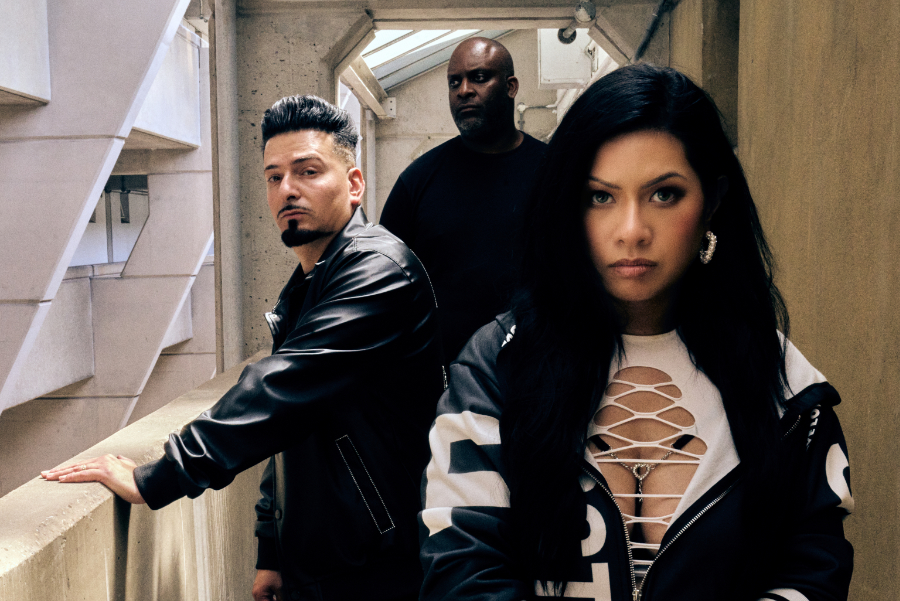
909originals caught up with Mike (aka Mike Panteli) and KCAT (aka Catherine Lingal) to discuss the track’s origins, it’s re-emergence, and why it resonates with a new generation of listeners.
There’s a famous quote that ‘there’s no second acts in American lives’, but there’s certainly a second act in Delinquent’s life, thanks to the recent revival of My Destiny. But before we go into that, let’s go back to the beginning, to the formative months and years for Delinquent. How did things come together?
Mike: Well, it’s a story of all of us really meeting at the college we attended. KCAT and I lived very close to each other, but we didn’t know each other yet.
We both attended Barnet College. I remember seeing KCAT win a talent show at the college – that’s the first time I really saw her – and apart from pretty much falling in love on the spot, we got talking and found we had a mutual love for music. I was making instrumentals at that time with my guitar at home. So I wasn’t quite a producer yet.
In college, I met Phil (Omo), who became the other half of Delinquent, and we started making R&B instrumentals. We were getting better and better at it, and eventually I played some music that we’d put together for KCAT. She absolutely loved it.
Tell me about that talent show, KCAT? What did you perform?
KCAT: I’m of a Filipino-Spanish background. Most Filipinos inherit two good genes. One’s a singing gene and the other one’s a nursing gene. I didn’t want to be a nurse. I was pretty good at singing and I was encouraged by my family, but I wasn’t very confident.
But then I started winning a few competitions, and that gave me a lot of confidence. At that college talent show, I was actually heckled by Delinquent. They couldn’t believe that I was singing, they thought I was miming. I was like, ‘I’m going to prove it to you that I’m singing live’, so I switched off the music, and stared Phil out for a bit.
I actually was working on a lot of stuff before meeting Mike. I was signed to Virgin the same year that I met Mike and Phil, and I had a solo project. So, yeah, it didn’t just come out of nowhere. It was years in the making.
Tell me about the kind of musical scene that you were both into. Was R&B the big influence? And what period of time are we talking about here as well?
Mike: We’re talking about 1999 – that was when I was first making instrumentals and met KCAT. So we’re not even in this century, first of all. I got a lot of influence from mid-90s R&B and hip hop. I loved the rhythm, the way rap and R&B would work together. I also love the guitar – Latin music, jazz, Stan Getz, that sort of thing.
Phil’s influence was more Fela Kuti and a lot of that African scene, while we both loved dance music. Everything that was coming out on Ministry of Sound in the 90s. So, production-wise, those were the ethics that we took into the studio. Our core influences were Timbaland, Dr Dre and Neptunes.
Making R&B with guitars was initially where we were at, and we realised there wasn’t much of a market for this at first – you had to be signed to a major label. So we started an independent label so we could release it ourselves.
KCAT had her own career at this point, and was making some amazing music. We started working with her in 2004 – we were boyfriend and girlfriend by this point. We had such a deep connection when we worked together in the studio – she understood my music, I understood her lyrics and melody, and we worked so well together.
So, after various other vinyl releases, and after Phil and I remixed Usher and Ciara and various international acts, we ended up releasing My Destiny on vinyl initially.
It was initially a garage track, and then it became a 4×4 anthem, especially in Sheffield. And that was where I would say that the first stages of My Destiny really happened, from 2005.
On your own solo career, KCAT, was that in any way linked, musically, with what the boys were doing? Or had you gone off on a different tangent?
KCAT: No, it was definitely similar. When I got signed, I was doing predominantly R&B. And then, as you get signed, it gets watered down to more pop-R&B and eventually pop.
When I met Mike, he was showcasing a few of his tracks, what he was working with. And I actually thought he was very cutting-edge. You could hear his influences were the same as mine: Timbaland, Missy Elliott, those sort of artists. The music that we grew up with was very similar, so when we started working together, we were very aligned.
I had to clear it, obviously, with my management, but they heard his tracks and they said, ‘Who is this guy?’ Mike was very confident. He came to the studio and introduced himself to everyone – unbeknownst to me – and showed them all his productions.
It’s interesting, Mike, that when you started Delinquent, there wasn’t really a market for what you were doing, so you put it out yourself.
Mike: Yeah, exactly. I mean, by 2005 or 2006, the industry was in a difficult place. The quality of the music that was out there on the overground, commercial labels, wasn’t the best. The best music was being readied in the underground – you had the emergence of grime, and of 4×4, which was essentially vocal garage, but rebranded.
UK garage as a genre had faded off by that point, and had become much more bass-heavy, merging into grime and taking off that way. Speed garage was also fading. Also, there was an issue with the word ‘garage’ – events would be shut down by the police if they contained the word ‘garage’. So, when we did events, we called it ‘4×4’ – up north, it was called ‘4×4 bassline’, or ‘bassline house’.
Initially, we really suffered and struggled just to get our sound out there. But we backed ourselves. And we had the courage to do it. In our 20s, we were very rebellious. We had to go against the grain. The old school didn’t really like us too much. Ok, that’s a generalisation – we got on with some amazing characters from yesteryear. But there were a few who were trying to hold on to what they had done.
So we had to break off. We had to leave London. We had to go to Birmingham. We had to go to Leeds, to Sheffield. We spent a good two years pushing our sound. That’s why I believe My Destiny was one of the first flagship vocal tracks within the 4×4 bassline scene. Also, it was the first song from that scene that got signed to a major record label, which was in 2007.
Obviously Sheffield and Leeds, the cities you mentioned, have been the breeding ground for so many genres over the years, like bleep techno in the early 90s and then the hard house scene. With the bassline scene – how cognisant were you of that in London? Why do you think Sheffield ‘got you’, I guess?
Mike: When would put out our vinyl, we would have our two-step vocal versions, and then, on the flip side, we would have these more obscure 4×4 versions. Some of them were dubs, some of them were full vocals. We wouldn’t necessarily stick to the song structure.
One example is our remix of Natasha Bedingfield’s Single, which was her first single on Sony BMG. The chorus that we were given, we didn’t use it. We chopped up a different part of the song and made a different chorus. That was the beauty of it.
Bassline played by its own rules. I think the reason why Sheffield took to it was because there was a ‘drop’ after the breakdown. It was all about that moment where the vocal kicks in with the bass.
That’s why they took to us. London didn’t really take to our sound. London wanted to play old-school garage, but we wanted to move things forward.
I’m not saying that we started bassline, but we definitely were right there at the beginning. That cross between speed garage into bassline, we were absolutely there, along with a few other big names in Sheffield, like DJ Veteran, Booda and Jamie Duggan, plus producers from London like Agent X, Arcane and Domino.
You mentioned My Destiny was the first bassline track to be signed to a major. In terms of the concept behind it, the original idea and the early demos, were you feeling there was something different about this one?
Mike: Yeah, I remember the first writing session was really special. It was literally one riff, a very basic beat pattern and a bassline, which was more garage-y to begin with. And KCAT then wrote the song.
KCAT: I wrote it about Mike. At the time, we were going out, seeing each other a lot and working very hard in the studio. For us, in the studio, it’s 100% business – we don’t mess about. Once the track is laid, even if it’s a basic track, we have to get to work.
Initially, we did have a song in mind before, but as soon as I started singing my part, I realised it wasn’t right. It was called Two Of The Same originally, although it covered the the same topics – destiny, fate, serendipity, meeting someone.
Mike and I had always ‘known’ each other to some degree, but kind of hung around in different circles, hovered around each other, crossed each other’s paths. I wanted to incorporate that in the song. And that’s how My Destiny came about.
From the start, Mike was very adamant that it was a hit. He heard something in it that I wasn’t quite sure about, to be honest. When we heard the finished track, even in its rawest form…
Mike: …we felt something. Definitely. I just felt from that moment that there was something about it. And we hadn’t even got to the full version yet.
Even from the first two or three lines that she sang, I felt like this was a song that people were going to want to hear. We hadn’t even got to the chorus, but it was going to happen. The whole thing took just two sessions – we only came back in to do a second session to redo the chorus. Then, when the song was complete, we put together a more club-friendly version.
You have to remember what it was like in 2006. The only way you were going to get your song out there as an independent artist was to press it on vinyl, get it to DJs and have DJs play it in a club. Luckily, Sheffield took to it first, and then it spread around the UK.
We started doing PAs, and then it started being passed around in schools as a Bluetooth ringtone. That’s sort of an older equivalent of what’s happening now with TikTok.
I remember those ads for ringtones in magazines – ringtones and logos for your Nokia and all that sort of thing.
Mike: Yeah, Sony Ericssons and Nokias used to have little snippets of bassline songs. And luckily, ours was one of the ones that was spread around. It was very effective. That was a big reason why it did well, actually.
Also, you made the UK charts, peaking at #19 in March 2008, which was massive for you guys. In terms of the Delinquent story after My Destiny – did you hit the same heights once again with other releases?
Mike: I think the priority was always to write songs. KCAT and I have always been in the studio constantly, since we started working together. We’ve got many, many songs across all sorts of genres.
So, after My Destiny, we focused on writing songs. Some of them turned into bassline tracks. I also worked on KCAT’s solo project after that.
KCAT: I did a lot of writing and did some backing vocals as well. I nearly ended up in a girl group.
Mike: There was pressure to come up with a follow-up to My Destiny, and I think we gave a good account of ourselves when we made I Got U straight after.
Delinquent effectively split in 2009, when Phil and I stopped working together. I became the Mike Delinquent Project, continuing to work with KCAT. We’ve made a lot of music since. I became a Kiss FM presenter for six years as well, which was another string to my bow.
But when we started a family and had two children, KCAT wanted to focus on being a mother. And our lives have taken a different journey, let’s say. It’s been a blessing having children, and it’s been a challenge as well. We have neurodivergent children – one of them is diagnosed with autism. So, a big part of our lives is making sure our family can function every day.
Before, it was all about music – 100%. It was a non-stop obsession. Now, we still have that side, but it’s also about family life, autism, neurodivergence, a merging of everything. With young, neurodivergent children, music is such a big part of their development, and we’ve found that we can use that to our advantage.
Let’s talk about the re-emergence – and the absolute stratospheric growth – of My Destiny. I saw a post in September where you had 10.5 billion views. It’s probably much more than that now.
Mike: Yeah, that was over more than a month ago. It’s about 11 billion now.
That is phenomenal, first off. How, why and where do you think it happened? When did you realise that My Destiny was suddenly taking off?
Mike: It was on TikTok. I received a message from an account I’d never heard of before, saying, “Have you seen what’s happened with My Destiny?” We checked it out and saw video after video, thousands of uploads. It started at something like 3,000 uploads a day, then it eventually became 10,000.
Also, in the early stages, it was very much the neurodivergent community, young adults and late teens, who were taking a soundbite of the chorus and a soundbite of the chopped-up ad-libs, looping it and putting it behind their own videos. It was a song that they were really relating to. I got a message saying, “I really love the sound of My Destiny. It calms me and it heals me.”
KCAT: Messages like that were really rewarding in the early stages. It felt like the song was sort of an anthem for people in the neurodivergent community. To see a whole community like that gravitate towards this song, has been very emotional. It’s validation that what we’re doing is the right path.
Obviously, neurodiversity wasn’t part of your thinking when you wrote the track and the lyrics.
KCAT: Yeah, I didn’t know enough about it.
Mike: Personally, I’d heard of autism and neurodivergent individuals, but we didn’t know much about them. It wasn’t in the plan.
In retrospect, when you see the community embrace it and think of the uplifting and empowering nature of the lyrics, does it make sense?
Mike: It’s almost like two eras have come together, and that has been emotional. We wrote and produced a song in a different era, essentially, and then a completely different set of people have gravitated towards it. It feels like fate, like it’s meant to be.
KCAT: Since this has happened, I’ve stripped back the lyrics and listened to the music. There are so many elements in there that resonate – the repeated ‘eeeh’ sound is something that my son uses to regulate. Also, the fact that it’s about destiny. That idea of ‘this is who I am’. It makes sense that people would gravitate towards it, saying they’re accepting themselves.
Mike: The fact that it came together in April, which is World Autism Awareness Month, and just after National Autism Awareness Day, just fit like a glove. We couldn’t believe it.
We were sitting there looking at all the posts, looking at the numbers going up every single day. And then record labels were knocking on the door. Three days later, we had eleven offers for the song from absolutely everyone you could imagine in the music industry.
At one point, we just looked at each other and thought, “What is going on?” There was the option of not signing at all and just keeping it independent. But I think you’ve got to look at your situation and do what’s right.
We felt that a record label like Robots + Humans, with Ministry of Sound and Sony, was the appropriate label to take it forward. With this new era and this new demographic that have discovered the song, we’re truly grateful for it because it’s given us new-found confidence.
KCAT: I’ve been out of the music industry for a while. Being a mum to neurodivergent children, you’ve got to put a lot of attention into that. It’s a job in itself, but a rewarding job. So to see this happen, it’s been kind of like an awakening.
With that in mind, how are you capitalising on all this? Obviously you’ve got so much going on with family requirements, but is Delinquent, as a live act, having a new lease of life?
Mike: Well, in terms of honouring the original release, we perform together as Mike Delinquent and KCAT now. We have this really cool one-hour set where KCAT sings and I DJ.
It’s very much a nod to the sound of today, which could potentially be seen as deriving from that era of the 2000s, with new producers such as Silva Bumpa, MPH and Interplanetary Criminal. It’s a very energetic set, very festival-ready. We played at XOYO in London recently, actually, and we’re very excited about the future.
For you, KCAT, you mentioned you had largely parked your music career, and now you’re back on the road. There’s a visibility and a relevance about Mike and yourself that hasn’t been there for close to 20 years. What has that been like for you?
KCAT: It’s a different audience, a completely different audience. But the success of the song in itself is bigger than I am, to be honest with you. It’s like a child I’ve given birth to a few years ago, and it’s having its own life. There’s so much love for the song. Music travels across generations, particularly when it means something.
Mike: What’s also special is that the explosion on TikTok has made the song international. It’s travelled across Europe, to Germany, Eastern Europe, and even Australia. It’s also been very much supported in the UK. But I think the beauty of it is that it started life as a song that was made in London, and this time around, it has planted seeds across the world.
We’ve got messages from so many places about My Destiny, and we continue to do so. I think that’s what we’re proud of the most – the fact that a song that is special to us has now become everyone else’s song, around the world.
Keep up to date with the latest news from Mike Delinquent and KCAT here.
About Post Author