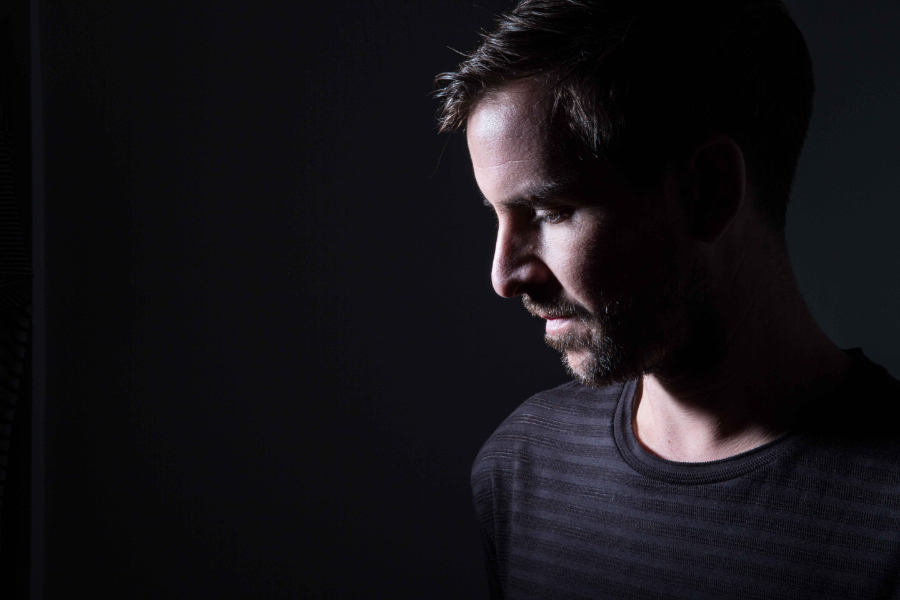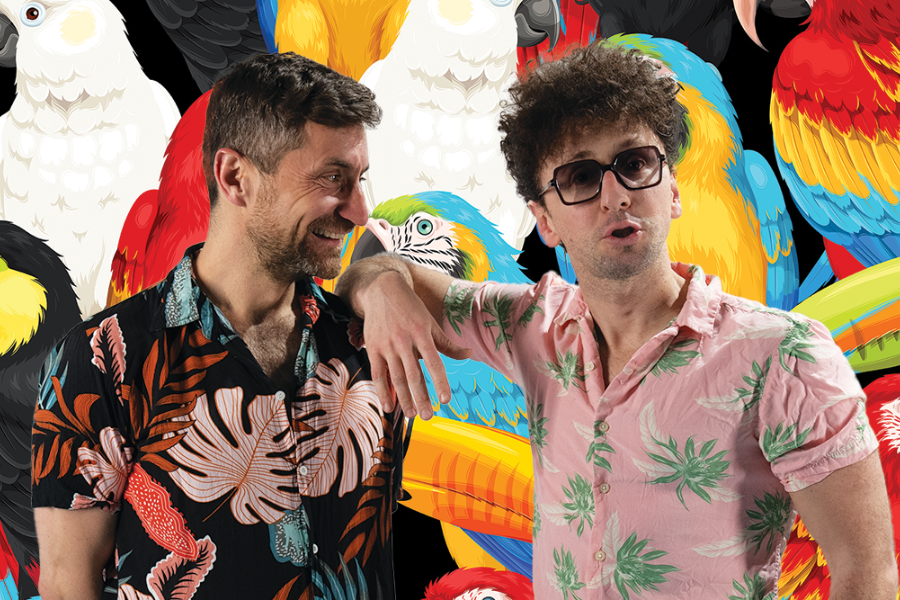
Frankfurt-based electronic group Chasing Kurt have just released a new single, Maybe, which blends upfront vocal house with flashes of electro and disco.
Chasing Kurt, currently led by founding member Wojtek Kutschke and Vince Master, who began working together last year, have been releasing music since 2009, with early release Money featuring in Maya Jane Coles’ 2012 DJ-Kicks mix, leading to a relationship with Berlin label Suol.
Their debut album, From The Inside, followed in 2013, with its title track picked up by Defected and remixed by Henrik Schwarz, Daniel Bortz, Copyright, Konstantin Sibold and Lovebirds. Following a break, the project returned with releases on Miami Vince Records and Stained Records.
For this week’s #MyRecordBag, Chasing Kurt serve up a playlist of ten tracks that shaped their musical journey – with Wojtek contributing the first five, followed by Vince’s selections.
Wojtek’s selections
Marshall Jefferson vs. Noosa Heads – Mushrooms (Salt City Orchestra Out There Mix) (1998)
“A classic, of course, but there’s something about the atmosphere of this track that really moves me. It feels like being taken on a journey through the day, and it’s the groove of the Salt City Orchestra remix that makes that journey so special. The original never had quite the same effect on me. The remix gives the whole track a sense of movement that I absolutely love.
“I also only recently discovered that Chris Liebing was involved in the original production, which genuinely surprised me after knowing this record for so many years.”
Mr. Fingers – Can You Feel It (Martin Luther King Mix)
“Can You Feel It is one of the defining classics of deep house. Larry Heard created something timeless with such a simple arrangement and an incredibly warm, hypnotic atmosphere. What makes it even more remarkable is that he achieved this sound using little more than a Roland Juno-60 synthesiser and a TR-909 drum machine.
“I particularly love the version featuring Martin Luther King’s I Have a Dream speech. His words about equality, freedom and hope for a better future give the music another emotional dimension.
“For me, there’s also a strong connection to where house music actually came from. Its roots lie in the Black, Latino and LGBTQ+ communities of Chicago in the late 1970s and early 1980s. Clubs like the Warehouse, with Frankie Knuckles behind the decks, became places where people who often faced discrimination could come together, express themselves and find freedom through music.
“That’s why this version means so much to me. It connects the history of house music with the values of equality, freedom and unity that Martin Luther King fought for. And it reminds me that house music has always been about much more than just dancing.”
Sade – Nothing Can Come Between Us (1988)
“I chose this particular song, but I could easily have picked countless other tracks by Sade. Her music has always had a very special place in my heart. I grew up listening to her albums as a child, and they still move me just as much today.
“There’s something incredibly timeless about her music. The soul, her beautiful and unmistakable voice, and the wonderful arrangements all come together in a way that never gets old. It’s music I can return to again and again, no matter how many years have passed.
“For me, Sade is one of those rare artists whose music never loses its emotional impact.”
Blaze – Lovelee Dae
“I first heard this track on hr3 Clubnight, a legendary German radio show for electronic dance music. I remember thinking, ‘Wow, what a hit!’ It had an enormous impact on me and made me fall even more in love with house music.
“Over the years, so many great remixes followed, and the track stayed with me for a long time. There’s something about its warmth, soul and uplifting energy that captures everything I love about house music.
“For me, it’s one of those timeless classics that never lose their magic, no matter how many times you’ve heard them.”
Daft Punk – Around the World (1997)
“I had just started buying vinyl records when Daft Punk released Homework. Downtown Records was one of the record shops where I began building my collection, and I still remember listening to the album shortly after its release, standing at a turntable with headphones on.
“I remember thinking, ‘Wow, this is something special’. The whole album felt like a complete work of art, with a sound and energy unlike anything I’d heard before.
“I chose Around the World because it captures that feeling perfectly. That hypnotic groove, the repetition, the simplicity of the idea and the incredible energy. And in a way, the title couldn’t have been more fitting. That energy really did travel around the world.
“For me, Homework remains one of those albums that changed the way I listened to electronic music.”
Vince’s selections
Claptone – No Eyes feat. JAW (2013)
“No Eyes captures what I love most about deep house: a steady groove, a bassline, a few chords and JAW’s voice. Nothing is there for decoration.
“As a producer, I’m fascinated by how little changes over its length. Sounds drop out and return, while the vocal hook keeps circling. That’s the repetition I love in electronic music: it pulls you deeper in instead of wearing you out.
“I also love the lyrics. They’re far from the feel-good, happy vocals you hear on so many EDM tracks, and that gives the track its depth. No Eyes made Claptone’s name in 2013 and proves you don’t need much to say a lot.”
Fleetwood Mac – Dreams (1977)
“Stevie Nicks wrote Dreams in about ten minutes, over a drum pattern with a small cassette player running. The song essentially swings between two chords, and Christine McVie first found it boring.
“She changed her mind once Lindsey Buckingham built three sections from the same chords, each sounding completely different. That’s the lesson of Dreams: the material stays the same, the arrangement creates the movement.
“Producer Ken Caillat also turned Mick Fleetwood’s drumming into an eight-bar tape loop for that hypnotic feel. At around 120 BPM, no wonder it sits so naturally next to house music.
“Two chords, one loop and that voice gave Fleetwood Mac their only US number one.”
Iggy Pop – The Passenger (1977)
“The Passenger runs on one chord sequence from start to finish: four chords, a clipped riff, a loping beat and a chorus of nothing but ‘la la la’. On paper, too little. In reality, I could play it on repeat for hours.
“Ricky Gardiner came up with the riff on a spring walk and first played it to Bowie and Iggy in Berlin on an unplugged Stratocaster. Iggy wrote most of the lyrics on the spot at Hansa Studios, with Bowie on piano and backing vocals.
“It’s the electronic-music principle inside a rock song: the loop is the engine, the voice rides on top. Like the passenger, you sit back and let the city slide by. The lyrics were inspired by a Jim Morrison poem, which leads straight to my next track.”
The Doors – The Changeling (1971)
“The Changeling opens L.A. Woman, the last Doors album with Jim Morrison. It rides on one funky, driving riff at just under 120 BPM, practically house tempo.
“The band recorded it in their own rehearsal room, the Doors’ Workshop in Los Angeles: small space, simple setup, six days, mostly live to tape. Morrison sang in the bathroom doorway.
“After more than ten years of playing live in electronic bands, and producing with Wojtek in our own studio, I can relate. You don’t need a big studio to make a big record, just a groove strong enough to carry everything.
“The repetition never gets boring because it’s alive: real people playing together in one room. Released just months before Morrison’s death, it sounds like a band that had found its freedom again.”
Vanilla Ice – Ice Ice Baby (1990)
“The most surprising pick in my bag, but it belongs here. Ice Ice Baby is built on one bassline, from Under Pressure by Queen and David Bowie, plus an 808 kick, a few synths and a rap.
“It was the first hip-hop single to top the US Billboard Hot 100, yet it started as the B-side of Play That Funky Music, until a DJ played the other side instead. I love that a DJ decided its fate.
“For me, it’s the purest example in my selection: one loop through the whole track, and it never wears thin. Find the one element that’s strong enough, and trust it. A lesson for producers too: the sample wasn’t cleared at first, and Queen and Bowie only got credit once it was a hit.
“It closes the circle: from Bowie at the piano on The Passenger to a bassline from his collaboration with Queen, still moving dancefloors more than 40 years later.”
Thanks to Chasing Kurt for their selections. Check out their latest single, Maybe, here.
About Post Author