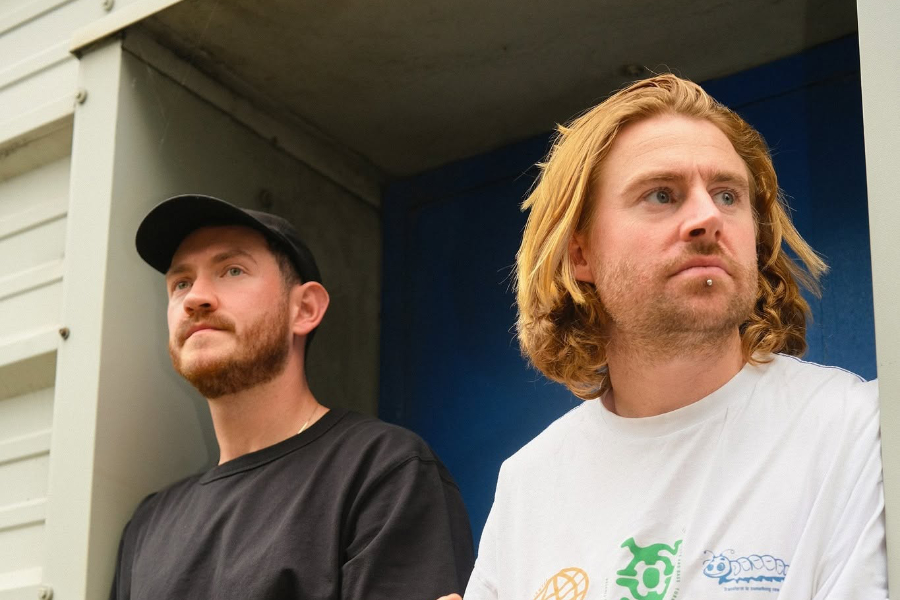
New York-rooted, Miami-based DJ and producer Adam Collins is a leading figure in the US tech house scene, with his refined approach to minimal and groove-based beats driven by a deep connection to the origins and evolution of the sound.
The co-founder of Omni A.M. (alongside the late Marky Star), Collins’ catalogue dates back over three decades, with releases on labels such as SWAG Records, Restless Planet, Real Deal Records and his own vinyl-driven imprint Euphoria Records, among others.
Aside from music, Collins is also involved in artist development through his Artistic Roadmap programme and production workshops, helping emerging musicians develop their sound and artistic identity.
On 22 October, Collins is set to appear at SWAG Records’ ADE showcase at Amsterdam record store Killacutz, alongside Boris Werner, Grant Dell and Herra. That appearance follows on from Collins ‘ tribute to the legendary label, Remembering SWAG, which was released earlier this year.
909originals caught up with him.
Let’s start with your upcoming appearance at ADE, which will be your first. What are you hoping to take away from ADE beyond your appearance at the SWAG event?
Honestly, I’m excited to bike around Amsterdam, see old friends, and finally meet some artists I’ve been trading music with for years but never actually met in person.
Before the SWAG party we’re also meeting up at Killacutz for a little record-store hang: records, exclusive music, conversations, no big production. Just music people being music people. That feels like the right way to start my first ADE.
What does SWAG Records represent to you, personally and musically? How important were spaces/labels like SWAG to the development of underground house music?
SWAG was original, fearless, and seriously fun. It wasn’t just about selling records or throwing parties. It was a place where people actually hung out, exchanged ideas, laughed, had a cup of tea, and many times stayed up till dawn in the studio making something.
That’s how scenes are built. You need places where people can gather without everything being about business. Close the doors, turn the music up, talk shit, make something new.
Your musical journey took you New York to Chicago and London before eventually bringing you to Miami. How has moving between those different musical communities shaped your identity as an artist?
Follow the music. That’s pretty much been the whole philosophy.
Every city gave me something different, but I never moved somewhere thinking, “now I need to sound like this place.” I listened, absorbed what was around me, met people, dug through records, and kept moving. The geography changes. The curiosity doesn’t.
Your approach has always been strongly associated with refined, minimal grooves. Was that something you consciously developed or simply the musical path that most appealed to you?
Psychedelic music with funky beats. It just worked. And I was having fun with it.
I wasn’t from Chicago, so I never felt the need to prove I was making ‘Chicago house’. At the time, South London tech house was bubbling, the German minimal/Perlon sound was coming through, and Gramaphone Records was connecting a lot of those dots for us. Shout-out to Michael, Josh Werner, and Justin Long.
All of that got into my bloodstream, but I’ve never been interested in fitting neatly into somebody else’s box. I follow what feels right for me, and what the track wants to be.
Looking back across your career, when do you think you found your own musical voice? Was there a particular record, release or period when you said to yourself, “OK, I’ve got it now”?
Never. And hopefully I never do. All I know is that I don’t know, and that keeps it interesting. The minute I think “OK, I’ve got it,” I’m probably in trouble.
Omni A.M. is synonymous with your story. How did the project come together, and looking back, do you think you were quite forward-thinking with your sound?
It was really just two dudes who found each other and wanted to make the music better.
We had very different tastes, different skill sets, and different ways of hearing things, and somehow that secret sauce worked. We developed a very focused creative approach and honestly didn’t give a fuck about much else.
Were we forward-thinking? Maybe. We weren’t sitting there trying to predict the future. We were just 1000% in it.
Tell us about the scene that Omni A.M. emerged from. There were lots of different sounds and influences in the mix, right? Not just house music?
Damn, that was a crazy time. Chicago in the mid-’90s was exploding in every direction: Derrick Carter, Gemini, Casual, Touch and Go, Wax Trax, Drag City, Tortoise, Guidance Records… the list is endless.
And that’s the point: it wasn’t just house music. You had all these sounds, bands, DJs, weirdos, and scenes colliding in real time.
I think the bands were especially important. A scene made up entirely of producers sitting in bedrooms and studios gets boring pretty quickly. You need collision.
You approached Omni A.M. like a rock band, and the live element was very important to you, which isn’t always the case with electronic music. Did that give a certain rawness or originality to your music?
Absolutely. The music was performed, not just programmed.
When you play something live, accidents happen. Things breathe. You react instead of overthinking. That gives the music a feel that’s difficult to manufacture afterward.
I’ve always preferred live arrangements. But I’m a producer before I’m a DJ, and I think that changes the way I hear everything.
The Euphoria label emerged from a series of events you were running alongside your friends. Do you think that shaped the label’s approach from the outset, that it had to work on the dancefloor?
It really started because we wanted to have a good time, and somebody had to make it happen.
Nobody was offering us gigs, so we were on the street handing out flyers and mixtapes. No social media, no shortcuts. We had to create our own opportunities. We threw a ton of parties before we ever released a record.
Then it became the same thing with the music. Nobody was going to put it out? Fine. We’ll do it ourselves.
Guidance liked the demos and encouraged us, but they didn’t take the chance on Omni A.M., so we took the chance on ourselves. Spending nights listening to Derrick Carter and the Chicago guys, or Thomas and Garth from the Wicked crew, naturally pushed us toward the dancefloor, away from the more experimental Key album. We wanted to make records we actually wanted to play.
How did running a record label change the way you listen to music and evaluate trends or other artists?
Honestly, running a label destroyed the innocence for a while. Suddenly you’re not just hearing music, you’re evaluating it.
Eventually I got past that. I don’t judge people’s creativity anymore. It’s either for me or it isn’t. And if it isn’t, who cares? Somebody else is going to love it.
For the label, I’m looking for a feeling: the music, the person, the whole energy around it. Take Mato: he’s a soul brother. It feels like we’ve already done this together in a few lifetimes. And luckily, he also happens to make bomb music.
You’ve described Omni A.M., House On Mute, Aquarius Rising and your other projects as different extensions of what you do creatively. Do you think of them as separate parts of your personality?
Yeah, but they all come from the same brain, or the same problem, depending on the day.
I’ve never wanted one project to carry everything I’m interested in. Different names give me different rooms to play in. One can be deeper, one stranger, one more direct, one more experimental.
They’re different personalities, but they all have the same DNA.
You’ve increasingly combined your work as a producer and DJ with workshops, education and helping emerging artists. Why is that important to you?
I had great mentors and teachers, so passing that knowledge along feels natural.
Somebody showed me things, opened doors, challenged me, and helped me hear differently. If I can do some of that for the next person, why wouldn’t I? Share the knowledge. Keep it moving.
You’ve witnessed several generations of house music emerge, evolve and occasionally circle back or pay tribute to earlier ideas. Do you see today’s producers as continuing that lineage?
Absolutely. This new generation is incredible, and I’m genuinely thankful they’ve found my music and are curious about it.
They’re ridiculously good diggers. They can move through decades of music online incredibly fast, hear what worked, what didn’t, and eventually find their way back to the source: that raw party music from the late ’90s and early 2000s.
There’s always going to be entry-level dance music. That’s fine. Everybody starts somewhere. The interesting part is what happens when curiosity kicks in and people start digging deeper.
The next generation is carrying it forward. Support them as much as you can.
You’ve been making music and DJing for more than three decades now. What inspires you? What continues to excite you about electronic music?
Having fun. Staying curious. Staying true to myself. Creating good energy.
And doing the work, every single day. Repetition isn’t very sexy to talk about, but that’s where the magic happens. You keep showing up, keep making things, keep listening, and eventually something unexpected appears.
And yeah… having a muse definitely helps.
Other than ADE, what’s next on the agenda for you, and do you feel you have unfinished business with Omni A.M.?
My partner Marky Star passed away, so Omni A.M. isn’t something I think about in terms of ‘unfinished business’. The band was the two of us, and without Marky, it doesn’t exist in the same way.
There is still a lot of unreleased music, and maybe some of it will find its moment. But right now, I’m focused on my own material and what comes next. I’m interested in moving forward while respecting what we made together.
You can check out Adam Collins at Killacutz’ SWAG Records showcase at ADE on 22 October. More information can be found here.
About Post Author