

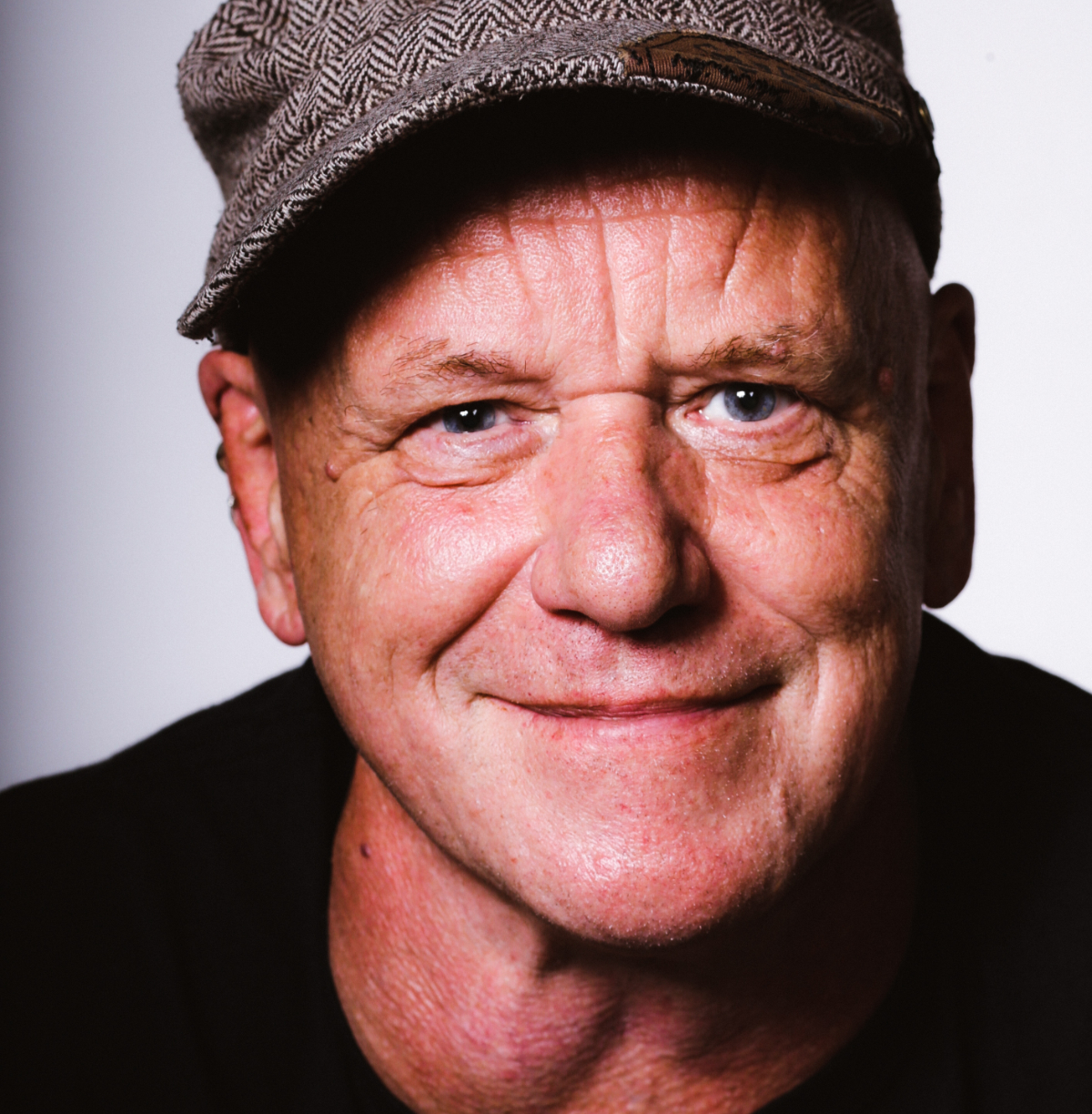
Few artists have defied convention over the years like Alex Paterson, figurehead of The Orb – having immersed himself in punk and dub reggae as a teen, he went on to roadie for rockers Killing Joke, worked in A&R for Brian Eno‘s label, E.G. Records, and somewhere along the line not only created ambient house, but built a more than 30-year career out of it.
Since The Orb’s 1991 debut The Orb’s Adventures Beyond the Ultraworld – which featured tracks such as Little Fluffy Clouds, Perpetual Dawn, and A Huge Ever Growing Pulsating Brain That Rules from the Centre of the Ultraworld – the group have released some 19 albums, with a myriad of personnel changes along the way (Paterson being the only permanent member).
Ahead of The Orb‘s 20th album release in a few months’ time – more details on that below – this past year also saw the launch of Orboretum: The Orb Collection, a career-spanning compilation that takes in formative classics such as Blue Room and Toxygene, as well as newer cuts from albums like Abolition Of The Royal Familia, released in 2020, Prism, which came out in 2023, and Paterson’s recent project with Pink Floyd’s David Gilmour, Metallic Spheres.
"Some of these tracks are 30 years apart, but there are clear through lines, a continuum.” Alex Paterson
— The Orb (@Orbinfo) September 24, 2024
The Orb – 'Orboretum: The Orb Collection’
PREORDER – https://t.co/7rzK8N4Ywm
25th October 2024 pic.twitter.com/xc3fF912XL
It’s not the first ‘Best Of’ that The Orb have released – following on from U.F.Off in 1998 and 2013’s two-part History of The Future – but it’s a notable one, in that it covers both the Island/Universal years, as well as music released on indie labels such as Cooking Vinyl, Kompakt, Malicious Damage, and Liquid Sound Design. Paterson, incidentally, also runs his own label, Orbscure Recordings, which is home to side projects such as Chocolate Hills and Sedibus.
Described in the press release for Orboretum as a ‘national treasure’ – although we’re not sure how he feels about that – Alex Paterson is one of electronic music’s true alchemists. 909originals caught up with him.
Hi Alex, thanks for talking to us. Are you in the middle of touring at the moment? I know there’s an Orb tour planned with Ozric Tentacles – two groups I would argue are musically kindred spirits. Have you worked together directly with them in the past?
We’ve just started. We did gigs before with them many, many years ago, like 32 years ago.
I’m amazed they’re still around, to be honest.
Well, I think they’ve got a very loyal following, so they’ve stuck with it – kind of like ourselves.
I wanted to start with the release of Orboretum. It’s obviously not the first ‘best of’ you’ve released with The Orb. You were trying to do something differently with this one though – not just pick the obvious tracks?
Well, that’s correct. I thought if we were to go down the same old route, what are we doing it for? But the main reason why I’m doing it is because finally, after 30-odd years, Universal have finally giving us permission – even though they were really reluctant to give us permission – so we can actually release our old tracks on a new label. As opposed to always releasing on Universal, and then they get all the money. Since 1993, I’ve not seen a penny.
The recent albums have been on Cooking Vinyl, right? When did you team up with them?
We’ve done three albums with them recently. And we’re doing a fourth one. We’ve done the Orboretum one as well, so that’s five. Plus, they’ve given me my own record label, and I’m releasing stuff on there twice a year.
Also, with the new compilation, it gave you an opportunity to put together some of the newer tracks from the last 10 years or so, like David Gilmour’s stuff, Lee Scratch Perry’s stuff, and Abolition of the Royal Familia, which haven’t really been on a best-of before, right?
No. Abolition is a really good album. It has these very dark moments. That was released, quite coincidentally, the day we had lockdown in the UK. It was March 27th or something like that – the actual day. And if you listen to the track A Slave Till U Die, No Matter What U Buy, it’s almost like kind of like ‘are you ‘f***ing with our heads’? You know, ‘stay indoors’, and all that malarkey.
It’s also got some Trumpisms in there as well, which is quite poignant today, because he’s got back in again.
My favourite Orb track of all time is not on the compilation, and I don’t think it’s on any best-of compilations either. It’s S.A.L.T. from Orblivion.
That’s bizarre. It’s one of my favourite ones too and I don’t know why I missed that. Actually, I know why I missed it, because it’s really dark – it’s seriously dark.
It’s got that David Thewlis’ speech running through it and it just turns into this drum ‘n’ bass monster at the end. It’s fantastic. It has a special place in my heart.
Andy Hughes, who I made that track with, passed away a few years back. and since then, I’ve stripped it right down and taken some of the elements of it. Now with AI, you can do whatever you want. You can strip a track down to whatever you like.
We did the same thing with Perpetual Dawn, where we re-did the vocals ourselves. And it works.
That’s the version that’s on the new compilation, isn’t it?
We were having problems with permissions from Universal again about using it, and someone who had smoked too much weed – he was a session musician – thought that he owned the song. Anyway we just nipped that one in the bud by doing an AI version.
So you’re embracing AI as a creative tool?
If you look at some of the new videos that have come out through David Gilmour’s agency, they’ve done a really mad new version of Perpetual Dawn and Spanish Castles in Space. They’re f***ing amazing. They’re like mini-epics, almost like mini-films. And they’re all done with AI.
Spanish Castles in Space is very simple in its construction, but that’s what makes it great, you know?
You’d be surprised the way this one goes. Spanish Castles goes into a place where it should have been called Indian Castles, basically. It’s totally bizarre what’s going on.
There was a quote of yours I saw, I think it was in the press release, and you were talking about how some of the tracks are 30 years apart on Orboretum, but there’s clear lines, like an Orb continuum. As your career has progressed, are you more aware of this thread? I mean, maybe it wasn’t there at the start…
Well, the thread was everything. And getting away with that thread, being able to throw so much together on one album, the first one being the perfect one.
It had ambient, drum ‘n’ bass – although that didn’t exist at that point in time. We were doing African beats, we were doing house beats. And ambient house, and proper ambient for Spanish Castles. The first album is a blueprint for all the other albums, to be perfectly honest.
One of the things I try to do with my interviews is get the origin story. With your starting point, Alex, obviously, you went on to work for Brian Eno’s label, which I’ll get to, but you started in punk. You were working with Killing Joke, you were on the terraces of Chelsea Football Club. And that’s quite removed from the chillout scene, or the ambient scene that you evolved into.
Yeah, but it’s also good. It’s such a great way of getting people off my back. Two months ago I went into a tattooist where I live down in West Norwood now, and he went, “Are you Alex Patterson from The Orb?” And I went, “Yeah, who wants to know?” And he went, “I thought you were a Chelsea headhunter.” That is the perfect kind of disguise. ‘Never judge a book by its cover’, as an old punk would say, and I’m an old punk so I can say it.
It’s important to look underneath the skin of people. It’s not just about what they look like it’s actually what’s going on inside. So, out of that conversation I got a free tattoo.
What was the tattoo?
It was a cloud. And since then I’ve got to know him very well. I’ve got another tattoo of my dog on my arm, which is a portrait picture which is really quite cool. She’s not a little dog, she looks like a wolf. She’s not been pampered by humans, she’s not what I call a ‘designer dog’ – she’s the next step down from a wolf.
The thing is, she deflects everybody coming towards me anyway. If I didn’t have her, people would just come up to me and start talking about The Orb. Which is perfect for me again.
She’s like a force field or something?
Yeah she brings them in and sucks them in and then throws them out again. She’s really good at smiling. You’re like, ‘what?’ But yeah, I’ve got a dog that smiles.
Dogs can smile. I think they can. I’m not sure if cats can smile.
Anyway, moving on from dogs and cats, I could have this conversation for a while.
Yeah, ‘Alex Paterson’s top 10 dogs’, that can be the title of the article. But going back to your background in punk – obviously in the early days of punk, before it became the cliché, was very much about that ‘rip it up and start again’ mindset.
I was 16 years old when punk started. I was the perfect age.
Like you were saying about the first album dictating what The Orb did—that kind of approach, that punk ideology, if you can call it that, sort of dictated how you approached life, art, and music. It was kind of like, ‘Let’s just see what happens’.
That’s basically what we were doing with all the ambient stuff. I just gave it more street cred, as opposed to it being upper middle class after-dinner music. I learned that through working at a record label that was really basically just full of upper-class idiots, basically. E.G. doesn’t exist anymore.
What year did you start working for them?
That was around ’86. I really got involved with E.G. because I was looking after Killing Joke, working on albums in different studios around Europe. I was managing things for them and acting as the conduit between E.G. and Killing Joke, but I was also really good friends with the band.
That’s how you met Youth, right? He was in Killing Joke?
Yeah, but we were at school together – we went back a lot further than that.
Okay. Is that how you ended up working with him?
Well, kind of, yeah. He asked me if I wanted to be a roadie. I was like, ‘what’s a roadie?’
I read somewhere that you were doing field recordings for them, which kind of led to your love of musical soundscapes. You were going out with a microphone recording trains and stuff like that?
It was a ball – there were these weird noises which I would capture in old warehouses in West Berlin. They were all derelict. I would be standing at the top of the stairwell, and put in a microphone in a bin at the bottom, and dropping it, so it recorded the ‘whoosh’ noise. That was beginning of one track. There were other weird little noises, like the little spring that you get on some doors.
Those mundane, everyday noises that we wouldn’t associate with music, but then becoming musical.
Then you run it through reverb, or something like that, and it becomes otherworldly.
It’s much more sought after these days, and it wasn’t during the 80s, let’s put it’s that way. I’ve never really been a proper musician, I’ve been a drummer, I’ve been a singer and I certainly know music.
I wouldn’t call myself a musician, I would call myself a DJ. Although I’m not one that just plays records and waves to people.
When you started DJing, that was around the same time you were working for E.G., right?
Well, I think the vinyl thing finally caught up with me, ’cause I was playing off cassettes in the late ’70s, early ’80s. I was going to all the reggae shebeens, blues clubs. I’d be like one of six white kids down there and the rest were all Jamaican and playing the best music. Always have done.
I’ve always liked the bass and drums as opposed to guitars. I’ve never really liked guitars.
There was kind of a lineage from punk into dub – did you subscribe to that?
That was the in thing with a punk gig, you had a DJ playing reggae in between bands playing punk. That was a way of saying to the world ‘we are multi-racial over here, we don’t have any problems with black people’.
The skinheads were being racist bigots to anybody that wasn’t white. The teddy boys were very much the same.
Would you say you fell into a tribe?
Well, I suppose so. I was part of the Croydon punks. I persuaded them to come to the very early Killing Joke gigs, because they didn’t have a following. So we created a following, then the record label could go, ‘Oh, look, they’ve got a following’. It’s very cliché, but that’s how it works.
It has to be done. So, when you were DJing, what kind of stuff were you playing? Was it a mix of everything?
It depends on the time period. In the early ’80s, I was playing off cassette, with all these radio shows from New York. There was 98.7 Kiss FM, which was where the original Kiss FM comes from; not the one in London but the one in New York. And there was another station called 92KTU and another one called WBLS.
Tony Humphries was DJing on WBLS in ’87 and it blew my mind. I used to get these tapes sent over from the office in New York. I would tell them, “Can you please make these cassettes up because I need them for research.” And they were like, “What, at 10.30 at night?” “Yep, that’s what I need.” It was quite amusing, really.
So you were getting sent hours and hours of stuff taped off the radio?
Yeah, and when you immerse yourself in something… I’m still doing it now. I’ve got a little recorder that I use to record little noises all the time. And it’s just everyday noises again. Or if someone’s talking on a phone, I record that and use that.
It’s just one of those things – like with Little Fluffy Clouds, we got Rickie Lee Jones talking in an interview.
And that bit at the start of Towers of Dub, with the phone call about Haile Salassie and Marcus Garvey.
That’s from Victor Lewis Smith. He was a journalist for the Evening Standard and he made up this cassette of all these phone calls he had with semi-famous people. He did another one about a German in a hotel room that’s genius.
He starts off with ‘hello my name is my name is Klaus, I seem to have spilled some water down the back of the television.’ It then rolls off into amazing satire. We didn’t use it because we have a German in the band. I didn’t feel comfortable taking the piss out of Germans.
Going back to the mid-80s, I mean, you grew up going to Chelsea matches, and then all of a sudden all these football casuals dropped a pill and started getting loved up, which you must have experienced first-hand. That must have been pretty f***ing surreal, right?
Yeah, you’d be there at four in the morning, in a warehouse in east London, playing house music to a load of West Ham fans all loved up, wanting to give you a cuddle. Very weird, but there you go. The good thing about the ’80s is if you were there, you don’t really remember it.
Was it like flicking a switch though, Alex? I mean, the way people talk about it, it’s like all of a sudden everything changed.
Yeah, it was just the case that in 1988/89 people started talking to each other again. Not bullshitting each other. And being loved up – that was the order of the day.
You were hanging out a bit with The KLF at the time, and you did the Tripping on Sunshine track…
It’s not our best piece of music. But then A Huge Evergrowing Brain sort of threw everything out of the water. We found our niche with that one.
How did you get into production, then? How did you start making music?
Well, in those days we finally got a sampler together and we knew what a mixing desk was, and The KLF had their own little studio in a squat down the road from where we lived. Jimmy was the out front geezer with [post-punk band] Brilliant, and I was a roadie for Brilliant, and we got to know each other.
One day, in the summer of ’88, I waddled around to his house and he had just bought himself a new keyboard. And he goes, “Do you know how to turn this on?” I go, “I do, actually. It’s an OBX. I also know how to play it.” And he went, “Well, go on, if you can play it, let’s form a band.” And that’s basically what ecstasy did to you. Anything went. And that’s what we did.
You worked together for a couple of years. Do you still talk to him? Because I know there was a falling out at the start of the ’90s?
Yeah, but that’s because they’re The KLF, and they needed to rule the world. With one album. A bit like the Pistols, release one album, and then milk it as much as possible. Jimmy always said that he wanted to be an artist – and he was an artist, before he joined Brilliant or The KLF.
He had won awards for doing a really weird painting of Stonehenge, which became the thing that all the hippies put on their walls. He gave me a painting of it, and it ended up at the back of the cupboard. I’m not really much of a hippie, myself.
Were The KLF an influence on what would become The Orb?
Bill was doing a little bit of press for us because he’s a bit of a press agent, and Jimmy and I were mucking around making records.
I could see where Jimmy was getting bit agitated because I didn’t really know what I was doing in those days. This is before Ultraworld. But when he basically said, ‘I’m leaving the band, you’re on your own,’ Youth came along and sort of tutored me. He was my flatmate at the time as well, and with us having our own record label together, it did help.
Then when we started getting some kind of recognition with John Peel and it was all coming out on Youth and mine’s label WAU/Mr. Modo, suddenly The KLF wanted to take over the band and put it out on KLF. So that’s where all the problems lay.
Okay, so it was almost like Jimmy leaving was the catalyst. Because it could have just been a KLF side project?
That’s what he was trying to do, though. I didn’t want it to be just a KLF side gig. I wanted The Orb to be The Orb, and I proved everybody wrong on that level.
It’s a nice thing when you’ve done nearly 20 albums and they’ve only done one, ha ha. There’s no comparison, is there?
And it seems like the last few years for you have been the most prolific. There seems to be an album every year now.
Yeah, there are many reasons. My health hasn’t been great since I turned 60. I’ve had a couple of heart attacks, a stroke, and I had a thyroid growth that has now been taken out. But it is what it is, and you’ve got to keep going.
I’m still going to live a long time if I take the correct medication and don’t go down the road of drinking loads of alcohol and smoking fags. It’s simple.
Well, I’ve never really smoked cigarettes. I’ve only smoked weed. Now, what I do is eat weed – eat hash – so it doesn’t affect my lungs in that sense. And I gave up drinking 15 years ago. I’ve never liked alcohol.
It took me about 20 years to realise that I was getting free booze all the time with The Orb. I just thought, ‘Can we just take the free booze out of my life?’ and my life got a lot better. I’m not going to preach to people, but we all have our own temples, and I know my temple is a lot better after not drinking all the time.
I’m being a bit more peaceful. I’ve got to stay stress-free. Otherwise, I’m going to have a seizure, and I don’t want one.
In terms of the lead into Ultraworld then, just going back to that, because as you said earlier on, it’s got everything on it. It’s got ambient, it’s got dub, it’s got breaks, it’s got all these different genres.
It’s even got classical music in there.
I’m imagining with the Orb that there wasn’t really a game plan, or was there? For that first album, was it kind of just like, ‘throw it in there?‘
I went to the record label, and they said, ‘Okay, we’ll give you a record deal.’ I said, ‘Oh, that’s nice. Can I make a double album?’ They were like, ‘I dunno.’ So then I was like, ‘Well, let’s make it a triple album.’ And then they went, ‘Okay, you can do a double album.’
So we did the double album, and then we did a remix album, which made it a triple album anyway. Nobody else had done a remix album at that particular point. So it was a little first – putting all that detail, the different styles of music, all on the same record – no one even thought about doing that.
And there’s still a lot of people who can’t get their heads around that idea, because they’re like ‘I need to stick to the same genre, and I need to sound like this, and I need to sound like The Beatles, and I need to sound like The Rolling Stones’, but they can’t do anything other than that.
We had that problem with Primal Scream for a while, but they finally got it together when they realised Higher Than the Sun was actually quite a good tune. And we made it absolutely stunning. That’s one of the highlights of our career in that sense, Higher Than the Sun. We didn’t get as much credit as we should have done, but that was Creation Records’ way.
You mentioned it briefly earlier on, Alex, about A Huge Evergrowing Pulsating Brain, which was on Ultraworld. I have to ask about the sample, because, it’s kind of hard to imagine that track without Loving You in it. Was Minnie Ripperton involved in the process, or was it just a cheeky ‘let’s throw it in there and see if we can get away with it’?
Well, originally we tried that, and we got the record taken off the shelves. So, we got a session singer in who sounded a lot like her, and everything was fine. That’s the way to do it, but we didn’t know that at the beginning.
Some other band was doing a version of Loving You that was very similar, and they actually got a Top 10 hit out of it. People thought it was The Orb, which was quite amusing really. And so, consequently, we never released it again as a single – apart from the remix, which is, again, eight minutes long, so it’s not exactly radio-friendly.
That said, the only ‘radio friendly’ thing about it was John Peel. It was surreal to do a John Peel session – I’d done them with Killing Joke many times, and then we did our own. Normally, we would do four tracks in a day, but we just did one big track and called it a day.
So basically, we were out of the studio by half past seven that night, whereas you normally finish around 11 o’clock, and you’re running around like headless chickens, trying to do a vocal before being shut down by the BBC. And the BBC, I mean, they’re just pathetic really – they’ve got this whole ‘you can’t drink before five o’clock’ rule, for example. But that’s another story.
In terms of how John Peel got to know you – you’re not the first, I guess, leftfield act that he championed.
Not by a country mile, but he gave us a John Peel session. And what we did—and this is cheeky—we used a little bit of the guitar from Wish You Were Here, and asked an old school friend of mine, who had just joined Pink Floyd as the new bass player after Roger Waters.
He asked Gilmour, ‘Can the lads just use a tiny little four-bar loop? They’re only going to use it once’. ‘Yeah, that’s fine’. So we went directly to the band, not to the management, not to the record label, but to the band. And so everything was sorted.
That was the root of why I did an album with David Gilmour 20 years later. So it’s all very incestuous, really.
There you go, that’s those invisible threads – or maybe not so invisible threads – we were talking about at the start. And when did you think, Alex, that you could actually make a career out of this? Or was it from the beginning? Did you already feel like, “You know what, I’m actually doing pretty well”?
I’ve always followed my mum’s philosophy on this one. I used to ask, “When am I going to get a real job, mum?” But I’ve just enjoyed it. I’m really not going to call it luck. Call it what you will, but you make your own luck.
If you’re talented at something, don’t let your ego take over, because then you’ll fall flat on your face. I’ve been incredibly lucky to have had the right people around me, pushing me in the right direction.
You had a string of albums in the early to mid 90s, UF Orb, Pomme Fritz, Live 93, and Oblivion. Did you see yourself as part of this ‘music machine’ then – that you were almost required to put out an album every couple of years?
This was really the latter days of the major record labels. It was a complete mess in the record industry. They didn’t know how to sell things, and they thought it would be the end of making records, since nobody was buying them anymore.
It was turning into a big disaster – music in general – but the thing that kept me going was being a DJ and playing live music. Then, records became really popular again.
Yeah, around ’96, ’97, you could still buy vinyl versions of all new albums that came out, and then they just disappeared. Then, it became this hipster thing. I’m looking at it here – my copy of Oblivion on vinyl that I’ve had for, what, 25, 30 years – and it’s probably worth a bit of money now, not that I’d sell it. But it’s interesting how it kind of came around. Anyway, after Cydonia, which came out in 2001, you had a bit more freedom after that, didn’t you?
Yeah, I mean, at that point, it had taken four years to get an album out. Napster or somebody else had been releasing versions of the album and putting them out beyond our control – basically just free downloads. So it didn’t stand a chance.
That’s when everyone started saying ‘music should be free’. But we can’t make music for free, and then you expect us to give it away for free. Come on, it’s not gonna work, is it?
But that’s the thing, Alex, it’s pretty much free now, with the money you get from streaming?
It could be 5%, maybe if you’re lucky, it’s 10%. Apple Music gives you 1% as an artist. I tend not to go anywhere near anything like that. What’s the point in giving Apple 99% of the money for making a record when all they’ve done is put it on sale? What a load of c**ts.
So, what’s next on the agenda for you then, Alex? Obviously you’ve got the tour with Ozric Tentacles and the new album. Does it have a name?
It’s going to be called Buddhist Hipsters. It all comes from a dream I had. That’s going to be in the press release.
To finish, thank you for all those times you’ve come to play in Dublin. I’ve got good memories of those.
Yeah, I’d really like to go back and spend some time at Newgrange again, as well as the Hill of Tara. It’s f***ing magical.
And you’ve got to remember, my dad’s from Scotland, so there’s a big Celtic influence running through me, in the bloodline. I’m not some sort of heathen from Germany, ha ha. With a name like Duncan Alexander Robert Paterson, what do you expect me to be?
An earl or something… someone with land, you know?
That’s a weird one, because my uncle told me years and years before he died – my Scottish uncle – that Bonnie Prince Charlie had an illegitimate son, which would directly relate to us and our family. Very bizarre. And if you look at Paterson House in Scotland, it’ll take you into that story.
Right. Are you going to be on that programme, then, Who Do You Think You Are?
Well, the English side of the family also found out that one of our 200-year-old ancestors was on the Bounty.
You should go and claim some of your inheritance.
Totally, don’t I know it? With dad being Scottish, I’ve got all his birth certificates, his papers from when he was flying in the Second World War. I’m kind of proud of the old git. After all, if it wasn’t for him, I wouldn’t be here.
Words by Stephen Wynne-Jones. Thanks to Alex for talking to us. Orboretum: The Orb Collection is out now on Cooking Vinyl, and can be purchased here.
About Post Author



2 thoughts on “The Orb’s Alex Paterson chats to 909originals”