Modeselektor, aka producers Gernot Bronsert and Sebastian Szary, have defied musical definition for two decades now, breaking boundaries and forging their own electronic path, on labels such as Bpitch Control, Get Physical and Monkeytown Records, the latter of which has been their home for more than a decade.
As well as being known for their idiosyncratic approach to techno and collaborations with the likes of Thom Yorke and Paul St. Hilaire, the Berlin-based pair (who first met during the halcyon days of the city’s early 90s rave scene), have also tasted success with their Moderat project, alongside Apparat’s Sascha Ring.
Adopting a playful approach to making music in the studio has translated seamlessly to their live sets and DJ performances, and the duo are set to make a welcome return to Irish shores next weekend, headlining the Saturday night of Another Love Story. The final tickets for this weekend’s bash are now on sale – trust us, you won’t want to miss out.
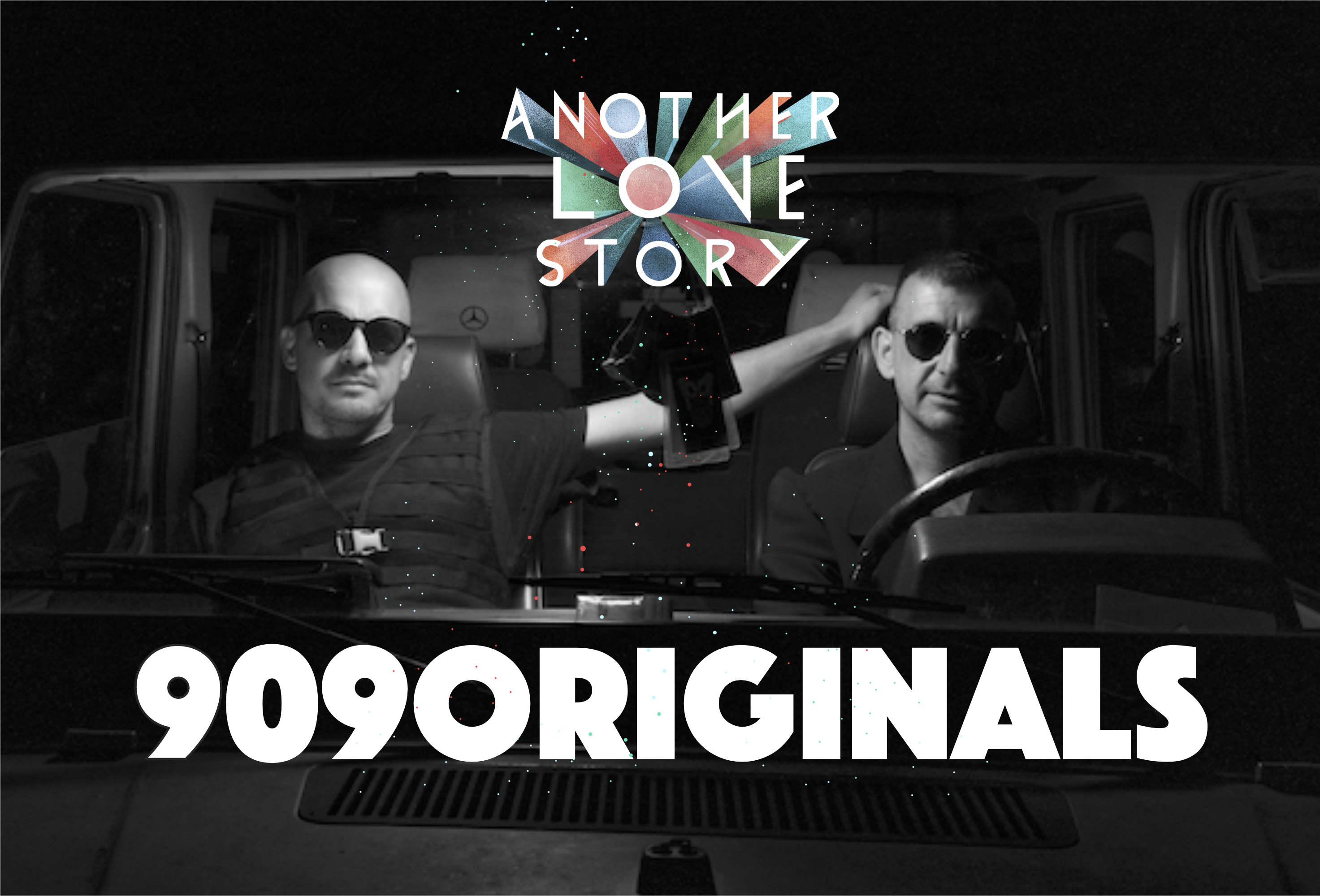
909originals caught up with Gernot and Szary to chat about their creative process, the changing face of electronic music, and their forthcoming DJ performance at Another Love Story.
909originals: Thanks for talking to us, guys. Hope all is well?
Gernot: This interview is for 909originals, right? Have you seen the article on Wikipedia about the 909? We are mentioned as one of the most famous users of the drum machine. We are pretty old school – we’re next to Jeff Mills and Aphex Twin, as the core users of the 909.
Yes, 909originals is the name of the site.
Gernot: Great, we’re on the right website then, ha ha.
We’ve learned over the years to be thankful, because we realised that all we have done over the years left some interesting marks everywhere. We didn’t really realise that what we did means so much to so many people.
This summer we wanted play a few shows and it turned out that we played a few more shows than we had planned to, because it’s just a lot of fun. Also, we keep meeting people who discovered us when they were young and now they are promoting festivals themselves.
We still have the feeling of being able to bring educational moments to the dancefloor, in the best sense.
And not trying to be so serious about it, as well.
Gernot: Yeah. We are in a lucky position to have another band called Moderat, where we totally dive into a different world, which is not really crossing paths anymore with the techno scene or the electronic music scene too much.
When we’re DJing these days, we realise that the kids are really into schranz music right now. But we’re not going to complain about that – we’re actually really happy with the faster tempo. When we DJ we can show them what good dubstep sounds like, because it’s so easy to mix with fast techno.
For the last ten years, the threshold for techno was around 135 BPM, but now it’s 140 and above. It’s so good to play the music we love, which is timeless anyway.
And you can probably bring in some of the you know acid techno from the early 90s, too – that’s around the same BPM…
Totally yeah, we played Analogue Bubblebath and the kids didn’t know it. They were super stoked about it.
You mentioned Moderat there. One of the things i wanted to ask you, when you’re working on music, you’re putting some chords together, you’re creating a tune, how do you decide ‘this would be a good Modeselector track’ or ‘we should give Sascha a call and make this a Moderat track’? Is there a certain approach you take, once you know what the basis of the track is going to be?
Gernot: No, I think it’s the other way around. We don’t go to the studio without a purpose. When we go to a studio, we go as ‘Modeselektor’ or we go as ‘Moderat’. It’s a decision that’s made before we start making music, and that makes things easier. In our experience, it makes no sense to collect sketches in a folder too much, for a certain project.
It’s more at the moment of creation – when we’re all together. We have the direction, first, and then start the creative process.
Szary: Also you have to create a feeling to come into this process – a feeling and an identity. Sometimes, there’s a moment when you realise, ‘ok, this isn’t a Moderat track, or a Modeselektor track’ – it’s something in between. That’s when you put it away.
Was that the case with Extended, which came out a couple of years ago? There were old fragments of tracks and things that were kind of a ‘work in progress’, which you updated? Am I right in thinking that?
Gernot: That was a weird record, I would say. We had such a long time in the studio. We had time and focus to create output without any purpose, in a way. It was totally free. That was a great experience.
But to add to what Szary said, it’s more important to get into the right identity to start working on a track, otherwise if you go in the studio and you don’t feel it – if you don’t think it’s either a Moderat or Modeselektor track – then you might as well go out to the sunshine and turn on the barbecue, and have a good time.
I think it’s very important to find the vibe without overthinking stuff too much, because the older you get, the more you start to overthink things. We try to handle that in a pretty professional way and try to create the best circumstances, or the best creative space, to start channeling ideas and create music.
This is a process which is not really easy to control – we are not really studied musicians who can sit down and write songs, and make concept music.
It’s always a little bit like being on the open sea, you don’t know if the storm is coming or not or if you have enough wind, you know? It’s a little bit like flying blind, but we enjoy it. You need no fear doing that.
You mentioned the word “vibe” there, Gernot, and with Modeselektor, it’s such a broad range of genres, right? I mean, you’ve got ambient, electro, dubstep, and all these different elements within the Modeselektor portfolio. So, I guess when you’re deciding that something is going to become a Modeselektor project, it’s not really about sticking to a specific musical genre, but more about the vibe, how it feels. Would that be fair to say?
Gernot: Yeah, you’re totally right. I mean, we are all Generation Aphex Twin – when he started making music 30 years ago, he had no genre. We were always quite interested in beats that were not common; we were interested in hip hop, and then Detroit Techno and Chicago House came along.
We realised very quickly that at the end of the day, it’s all sequenced music – music that is based on a drum machine and synthesisers or sampler.
I think the electronic music world is divided into technical camps. You know, you have the MPC group and you have the people who use drum machines. But both are basically the same. Nowadays, there might be machines that bring these two camps of electronic music users together, but for us, we never really identified with that segmentation.
Szary: As Gernot said, it’s about the sequence – the sequence never stops.
So it’s about that feeling when the sequence is rolling. It’s not easy to describe the moment, but it can be a drum, it can be a synthesiser, bleep, whatever, or a vocal sample. It’s a feeling.
It’s a feeling, yeah. I like that. I remember reading an article with you both where you talked about all the vintage synths in your studio and how they drift out of tune, take ages to warm up, and sometimes sound distorted because they might be a bit dusty. I found that really exciting because you’re able to get sounds out of them that nobody else can. The fact that they’re a bit broken actually makes them unique. It’s like you’re bringing these so-called ‘mistakes’, the humanity of the machines, into your music.
Gernot: Yeah, absolutely – that’s what we invest the most of the time in the studio doing, looking for sounds. Personally, I had to learn that the most important thing in the studio is to press the record button. Sometimes you create great, amazing sequences, and then they disappear after 10 minutes.
Szary is always searching for these – I wouldn’t call him a music producer, he’s more of a music designer.
Szary: I would say I’m looking for happy accidents.
You’re probably familiar with stream of consciousness writing, about letting things flow naturally, without overthinking or filtering too much, like Kerouac or other authors. In the studio, when you’re in that creative zone and things just start to come out, it’s important to capture those moments. If you don’t hit record, it’s like losing a piece of that pure expression. So, it’s very much about being in the moment and letting the music flow directly from your mind and soul, without trying to control it too much?
Gernot: I think that when we were younger – and more beautiful! – we just had fun, you know? Having fun is, in the end, the vibe. It’s a frequency. It’s how you feel when you love something so much, and you’re excited about it.
This is something you really need to pay attention to over the years, that you’re not going to lose. You need to have fun while you are creating, although it can be exhausting, too. You need positive mental health doing it, otherwise you might write sad music all the time.
The universe doesn’t really makes a difference between positive or negative vibes – this is a concept invented by humans. Plus or minus, you know? But we try to transform our feelings into music
Talking about techno these days, it just seems very serious. Producers seem to have kind of lost the ability to have a bit of fun. The fun seems to be missing from electronic music, but you guys have always had that sense of humour about your productions, and that more joyful approach.
Gernot: I totally agree. That’s what I miss with the new techno generation a little bit, because they have this weird sex thing going on, you know? They’re all dressed like they just came straight out of some dark room shit, with a Satanic theme on stage. It’s over-sexed.
But the music is not sexy at all, that’s the contrast. Some of the artists in this scene make great stuff, but actually the music and the identity of this hard techno scene don’t really match.
Yeah, I know. And it’s kind of a Berlin thing as well?
Gernot: No, I think that’s a bit a bit of a cliché, because of Berghain and stuff. I said on another interview that we are not willing to play ‘how to dress at Berghain tutorial techno’.
At the same time, Berghain is not the cliché you might think it is. We are close friends with Marcel Dettmann, he’s our studio mate, and we knew him before Berghain even existed. There are all these people behind it.
These days, there’s a lot of made up stuff on the internet around it, and about all these dressed-up kids trying to get in, and not getting in.
And many of them have no idea where it all came from.
Gernot: It’s kind of like a fairy tale for them. But there’s no big secret behind it. It’s sequenced music, and it’s a bunch of people having a group experience on a dancefloor. That’s it. That’s the magic, no more, no less.
Some people are using that to make money, or sell more merchandise, or whatever. But at the end of the day, a good DJ is a good DJ, and a bad DJ is a bad DJ.
You guys are still based in Berlin, right?
Gernot: Yeah, born and raised. We are among the few.
There was news the other day that a club, Renate, was closing, and obviously, the Friedrichshain-Kreuzberg area is so gentrified now. It’s changed a huge amount in the last decade. In terms of Berlin and its change, is the city losing a bit of its techno soul, for lack of a better term?
Gernot: I mean, it still exists. You have some Berlin-based underground clubs. But the beauty of the Berlin techno scene over the last 20 years was that it was beautifully unprofessional, I might say – it wasn’t really about making a lot of money, it was about having the most and the weirdest fun possible. The goal was to create the best dancefloor situations, not to sell more and more tickets. There was no ‘industry,’ so to speak. And this has changed.
The places are still there, though. If you know where to look?
Gernot: Yes, but I think it’s getting harder and harder to find good places with music.
Maybe I’m getting older now – I was done with schranz techno 25 years ago. But if the kids want to love it, then they should love it. And it will move onto something else soon, I’m sure.
Well, you’re the ones trying to move them in a more dubstep and breaks direction, as you mentioned earlier?
Gernot: Yeah, I mean, with music, it doesn’t matter which genre you listen to, it can touch your soul. It doesn’t matter if it touches your soul in a very warm way or in a harsh and hard way. The music finds a way to access your soul.
And a lot of this music can only be created in normal, very natural circumstances. For example, take someone like Rødhåd from Berlin – he’s an old friend of ours. Before the pandemic, he made a lot of changes in his setup, with the people he worked with, and started his own label, even silk-screening the covers himself in his apartment. He’s so passionate about his music, you know? And this passion pays off in the end.
When you have passion and you invest your love, time, and energy into something you truly love and believe in, it pays off in the end. This has happened in Berlin many times, and it’s still there, but you have to search for it.
What’s next musically for Modeselektor? I know you recently released a Moderat album, but there have also been a couple of singles and collaborations. Are there any bigger projects in the works for Modeselektor at the moment?
Gernot: We just built a new studio, actually. Every seven years, you need to change something, so we set up a new studio, which is always a great opportunity for new music. We’ll see what happens next.
Szary: It’s the best studio we’ve ever had.
Gernot: It has a 200-square-meter terrace—I’m not kidding. It’s huge. But we’re sharing the terrace with another office on the other side, which is the back-end office for SchneidersLaden. You might know them; they’re probably the biggest synthesiser retailer in Europe. It’s a real danger zone for our credit card.
Well, at least you should be able to buy them at cost price?
Gernot: We can easily borrow synthesisers that we usually can’t afford, which is very cool. For example, we can get our hands on Buchla systems or Polymoogs, use them, and then return them – or maybe not return them and hope they forget about it, ha ha.
So with the new studio you’re going to be kind of exploring newer sounds then or kind of getting more technical things?
Gernot: We are going to work on a new live show and new Moderat music, and we might also create some new Modeselektor tracks. Szary recently released a solo record called Datei, which is his first release under the artist name Szary.
Also I recorded a contemporary reggae album with two other friends. We went to Jamaica for this project, and it will be released next year. The album features mainly young talent from the island.
Also I recorded a contemporary reggae record, with two other friends. We flew to Jamaica for this, and this is also going to be released next year. It’s basically mainly young talent from the island. It’s not really reggae, but it’s out of our world. We’re going back to Jamaica in September, and DJ Koze has already remixed one of the tracks. Szary might also remix one of the tracks or perhaps the whole album.
And you can remix his stuff, then, I guess?
Gernot: That’s going to be difficult, because it’s already a kind of remix.
Szary: It’s an interpretation of the last Moderat album, Inside Out.
What can we expect from you guys next week then, at Another Love Story?
Gernot: I saw the DJ booth and the lineup, and it looks very simpatico. We are really looking forward to coming over. We always enjoy Ireland and appreciate the Irish crowd. We don’t really plan our DJ sets, so we’ll see what happens. We’re well prepared, but we’ll see what’s going on.
Szary: The only bit we plan is the first 10 minutes and then let’s see what happens.
Gernot: We plan the first ten minutes basically 30 minutes before the show, ha ha.
No, you’re right. It’s got a cool vibe—the festival is very down-to-earth and grounded. The crowd is very appreciative.
Gernot: I’m looking forward to it. It’s a little boutique festival, and we want to have a good time with all of you guys.
Thanks to Gernot and Szary for talking to us. Modeselektor perform a DJ set at Another Love Story this Saturday, 24 August, on the Further Afield stage, kicking off at 23.30. To secure your place at the festival, click here.
ALS24 | STAGE BY STAGE
— Another Love Story (@anotherlstory) August 9, 2024
Okay Lovers – here we go – your FULL ALS 24 line up.
8 stages of music & magic set amongst the glorious grandeur of The Manor.
Be with us to celebrate 10 Years Of Another Love Storyhttps://t.co/k6T9osmTAg pic.twitter.com/61ZOAo1ijk
About Post Author