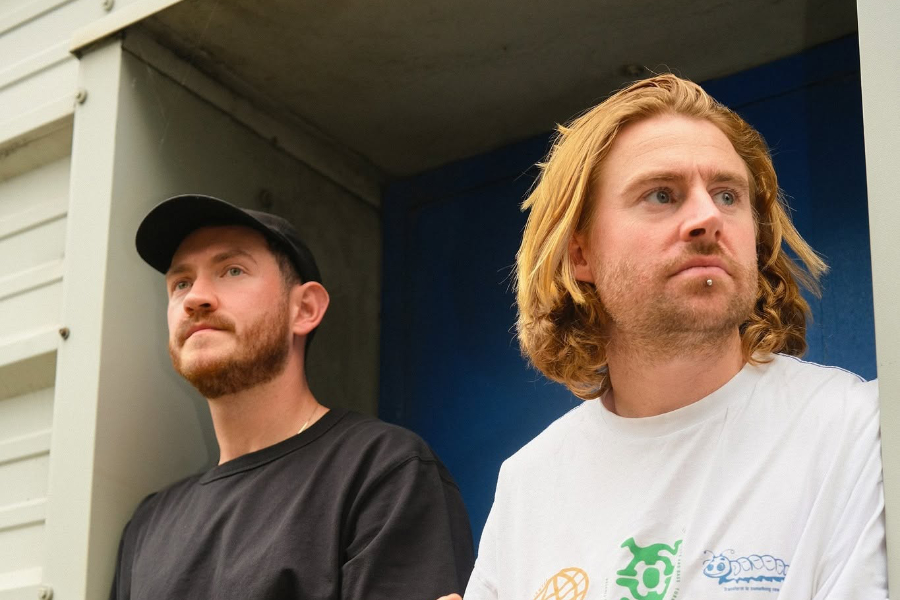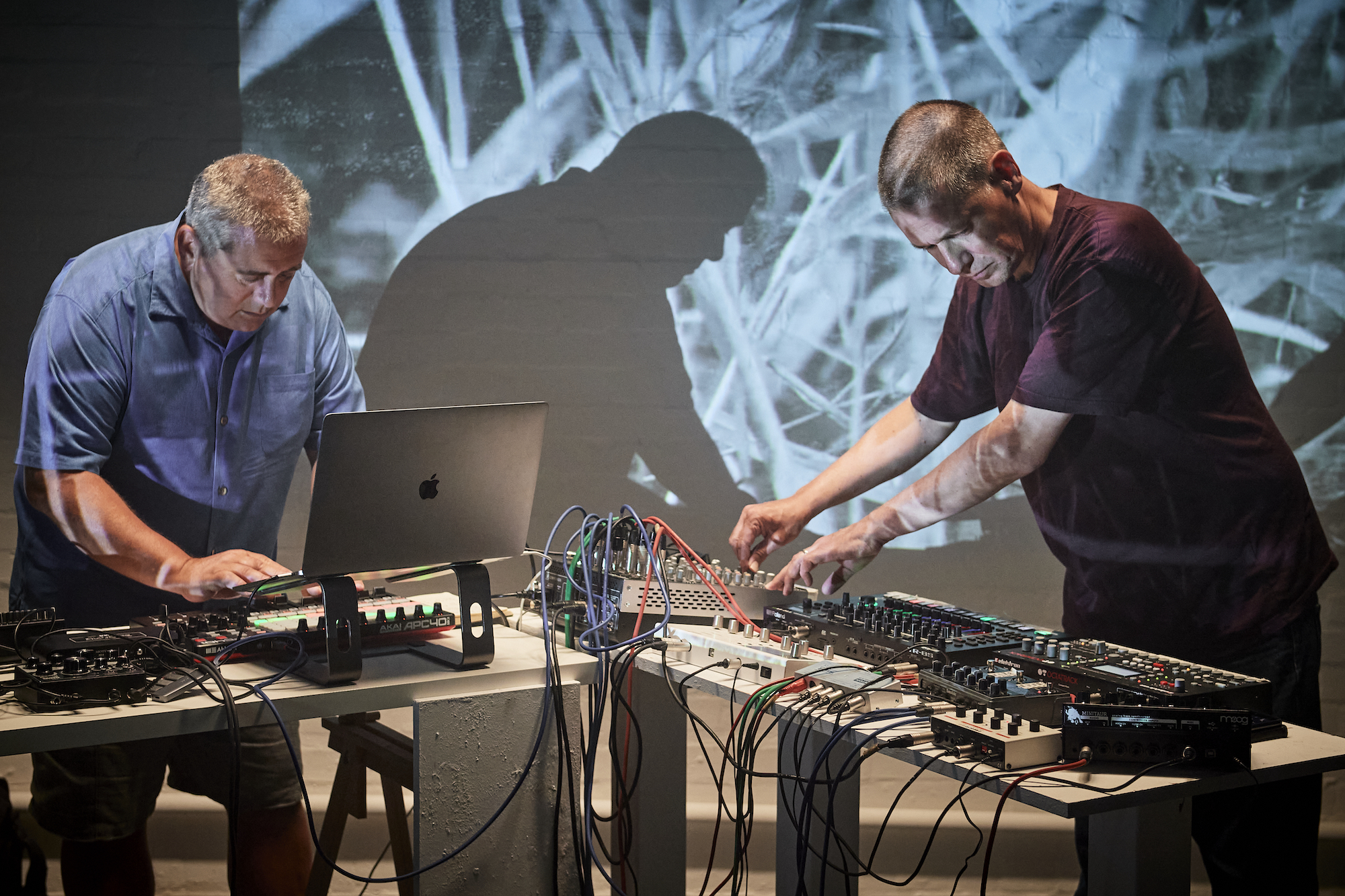
Formed in 1989, during the first flush of the acid house wave, Ultramarine have long defied musical convention – blending elements of electronica, indie, folk and ambient, among other genres, over a more than three-decade career.
The group – comprised of Ian Cooper and Paul Hammond – are perhaps best known for their 1991 album Every Man & Woman Is A Star, and barring a decade-long hiatus at the start of the Millennium, they continue to make music today; last year’s excellent Send And Return, released on Blackford Hill, being their most recent long player.
The duo have a rare live performance coming up at London’s Water Rats on 27 July (more information can be found here) and ahead of that, 909originals caught up with Paul Hammond to discuss the duo’s sonic journey to date.
Over the years, several epithets have been used to describe Ultramarine’s music – folktronica, ambient house, pastoral techno. How do you define it yourself?
We were even called Medieval House at one point! What we do is too broad to fit any one description, but I’ve made peace with ambient house and pastoral techno recently.
You’ve been working together in some capacity for around four decades now and have known each other for even longer. How has your relationship evolved over the years?
That’s right; Ian and I have worked together since we were about sixteen, so that’s over 40 years now. Our relationship has always been centred around the music, so in many ways, it hasn’t really changed much over the years.
We’ve naturally got some different tastes in music, but we’ve always found common ground with Ultramarine and have never really had any major disagreements. It’s all been quite harmonious so far!
What does each of you bring to the table, musically?
We have developed a sort of division of tasks over the years. In more recent years, I’ve been more focused on the foundations of the tracks (drums, bass, etc.) while Ian has worked more on the textural side of it. But that’s quite a generalisation.
When we’re writing, we tend to jam live in a rehearsal room and record straight to audio. Ideas get blended together quite quickly, so our individual input is not always so clearly defined.
We love the concept behind last year’s Send and Return, a series of musical musings about the Blackwater estuary. Has this approach – finding the hidden beauty in the everyday – been a longstanding feature of your work?
Send and Return is part of a loose project called Blackwaterside, which is a kind of homage to the Blackwater estuary in Essex. We’ve done a few recordings and performances relating to the project over several years.
I think this is the only project we’ve done that’s deliberately connected to a place or landscape, but some of the earlier records like Every Man and Woman is a Star and United Kingdoms were partly based on imagined settings.
There was a marked difference between your debut album, Folk, and Every Man & Woman Is A Star – you seemed to evolve very quickly as a band. What sparked that change?
The jump in style between Folk, and Every Man & Woman Is A Star was largely influenced by the music technology available at the time, particularly sampling. We’d been using synths and some basic sampling in the mid-80s before Ultramarine, and we developed that more on Folk, which was a mix of live band instrumentation and some sequenced synths and samples.
After Folk, the band broke down to just Ian and myself, and we started focusing on electronics, working mainly with an Atari 1040 computer and Akai S900 sampler. And of course, we were listening to contemporary electronic records and House music and things like De La Soul, A Tribe Called Quest, and Soul II Soul, which all fed into Every Man and Woman is a Star.
There was obviously a big shift in music and club culture at that time – a very positive and joyous time – and I think that all influenced the way we went.
There was quite a gap between your albums A User’s Guide and This Time Last Year – had you ‘parked’ your musical careers to some extent? And what brought you back?
Yes, we’d been working full-time on Ultramarine from 1992 and ran out of steam and money around the end of the ’90s. We made A User’s Guide knowing that we were signing off with that album. Ian and I stopped working together after that. I carried on doing a House label called Real Soon and did a few solo projects, and then Ian and I restarted Ultramarine in about 2010.
We initially restarted because we were inspired by Ableton and new hardware controllers and thought that it would be interesting to start playing live again. The new software and technology looked much more performance-based than it had been, and that excited us.
What musical equipment has been essential to the Ultramarine sound over the years?
The foundation of a lot of our tracks has been quite a basic House-influenced template: drum machine, bass, and a mid-tone mono synth like a 303.
Our essential machines have been things like the Roland TR-808 or Oberheim DX drum machines, a MiniMoog that we use for bass, and various monosynths that play the 303 role. I still love that basic House palette of sounds.
You were initially inspired – as many artists of the time were – by the likes of Cabaret Voltaire, 23 Skidoo, The Raincoats, and labels like Factory and 4AD. More recently, are there any artists that you think are particularly influential to your current sound?
I don’t think there are too many in recent years that have directly influenced what we’re doing. Going back further to the late ’90s, we were certainly influenced by producers like Theo Parrish and Moodymann and the Berlin scene around Basic Channel – also, the extended US scene around bands like Tortoise was a big influence at that time.
Nowadays, influences can come from anywhere and anytime.
You are playing in July at London’s Water Rats, but live performances tend to be relatively rare for Ultramarine. Any plans to play live more frequently?
We’d love to play live more. We’re certainly on the lookout for more opportunities.
Thanks Paul for the interview. Ultramarine play at London’s Water Rats on Saturday 27 July, with support from Alphabox and Riigs. More information on that can be found here.
About Post Author