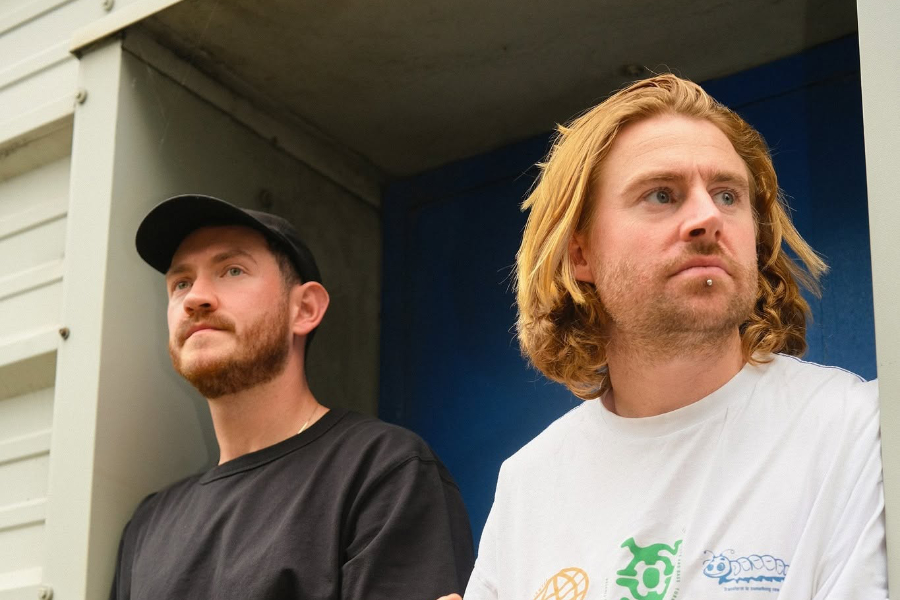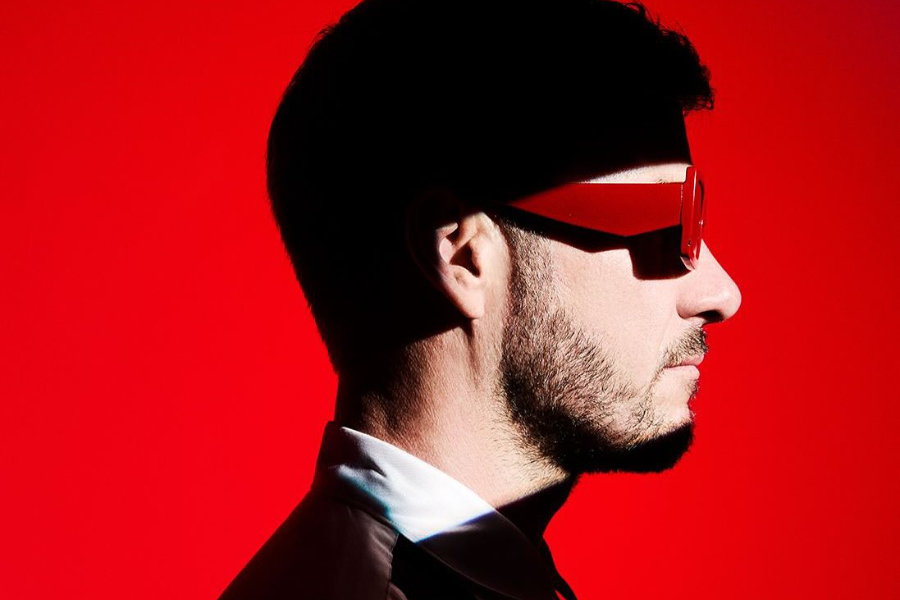
Matador, aka Irish producer Gavin Lynch, has been rocking dancefloors since the mid 2000s, cutting his teeth at Dublin venues such as Switch, Tripod and McGruders before going on to play festivals such as Awakenings, Sonus, and Tomorrowland, as well as global venues including Space Ibiza, DC-10, and Stereo Montreal.
The Ibiza-based artist is a long-time affiliate of Richie Hawtin’s M_nus imprint – as well as being an ambassador for Hawtin’s PLAYDifferently MODEL1 mixer – and has also released on labels such as Perc Trax, Excentric Muzik, and his own Rukus label, which he founded in 2016.
Originally trained as a chef in Michelin-starred kitchens, Matador brings the same professionalism to his musical output, a trait that is evident on Sirens, his recent single alongside Eynka and Tailor, on Interstellar Recordings. You can check that out here. He’s also just signed to Donal McCarthy’s Purple Wall management company.
909originals’ Emer O’Connor caught up with him. Over to you, Emer
I’ve listened to a fierce number of new releases from a huge array of artists, from promising fresh talent to the filet steak of industry legends, and I can honestly say this is the first time I’ve thought WOW on the first listen! Sirens made the hairs on my arms and the back of my neck stand to attention. Congratulations to you, Gavin Lynch, known worldwide as Matador, and welcome to 909originals.
Thank you so much for that lovely introduction Emer. I recognise that accent.
Yes I’m a Dub, a Northsider in fact.
Nice to talk to someone from home 😊
You’ve just released Sirens on Interstellar Recordings, part of Insomniac Music Group. Tell us more about this EP—how did it come about, how was the idea conceived?
Well, this one started when I got a couple of really nice microphones, and I was trying them out here. The chords began with me poorly singing a couple of lines over it, but I knew there was something in it. I was working up in Tom Staar’s studio in Ibiza, and he has different singers and songwriters coming in and out.
I was just doing my own work out of there, and I was working with other people as well. I had met Rob Taylor in there, and we worked on one of my tracks together, and it was cool. Then I spoke to the Eynka guys; we were working on another collaboration, and I asked them, “What about this track?” They were like, “There’s something really cool in this,” and we tried to rework my vocal, but it just wasn’t hitting—it needed that… well, professional vocal sound, and that was Rob.
I sent it over to Rob, and he connected with it straight away. I sent him everything I’d done, and he said, “Yes, we can expand on that.” There was a bit of back and forth for a few weeks, and Rob just delivered that vocal.
Just for anyone who doesn’t know, Rob is the hugely successful singer-songwriter Tailor from Birmingham. So, you’re in good company on this record?
Absolutely. The first time I worked with Rob was two or three months before we did Sirens. I had goosebumps, and the hairs were standing on my arms—just the way he was layering stuff, and the harmonies. It was perfect the way it sat around the music I was writing, so I knew there was a sweet tone there that worked with what I was doing.
Then it got to the point where we needed the Eynka guys, and they are big analogue synth guys. They literally sprinkled the magic over the top, and we ended up filling it out so much that we couldn’t squeeze anything else in. Everything felt good; it felt like a story. You just have these moments, few and far between, to be honest, where everybody on a big collaboration like that says, “Right, this is it.” There’s usually always something after it’s released where someone says, “Aw, we should have done this or that,” but on this track, we all felt, “This is finished, this is done.”
And the collaboration didn’t end there either. Now, typically, I’m here in my studio, and I have a lot of lovely mixing equipment, and I’ve mixed down records for both myself and for other artists over the years. But I just felt that this record needed an independent touch. So, we enlisted Julia Borelli. She’s a mixing and mastering engineer with a list of accolades and some very, very impressive clients. I listened to some of the mixes she had done, and I thought, “You know what? I need someone who is not emotionally attached to the record, who is going to be pushing and pulling certain things.”
She delivered back an amazing mix and balance that maybe we could have achieved here, but I really felt that was such an important component of the collaboration. So, it went all the way from starting in this room here, with a couple of chords and synths, to then growing into a real collaboration.
The Eynka guys were over here last summer, and we had an amazing day here in the studio, recording so much. So, yeah, we’ve all met in person and spent so many days in the studio together, and it just all came together very fluidly—quite a good, natural process.
Again, I hadn’t actually heard of Eynka. Every time I tried to Google Eynka, it kept giving me Enya. Haha.
Haha, that’s your location, so it is.
Well, what I do know is they are a London-based partnership between brothers Chris and Dave Hall and childhood friend Joshua Field, and they’ve had a few serious big-name collabs in their portfolio, including Adriatique and Camelphat. How did you meet Eynka, and what were they like to work with? Was 3 versus 1 tricky?
No, not at all. I met them through a mutual friend, Donal McCarthy, one of our local friends, but we’re now working together with the same management company [Purple Wall]. It was before I joined the management company, though—Donal was working with Eynka and he wanted to put us all in the room together to see what would happen. So that kicked off last summer, and it was a really easy process.
The lads are so laid-back, so cool. We just took the day as it came, and we were all just playing around with different synths and recording different things. We weren’t going in there with big expectations—it was pretty much, “Let’s just see how things go.” We ended up with enough material for two or three tracks that day alone.
So easy, because we’re all into the same things—analogue synths, hardware.
I was about to ask you, most of your in-depth interviews are now a decade old, and you mentioned your studio set-up consisting of an SL Nucleus, Logic, Waves plug-ins for dynamics, Soundtoys for FX, and some Focusrite gear, not to mention your synths, ranging from Moogs to Roland, both old and new gear. What’s changed since then? What did you use to make Sirens, for example?
Everything has changed. The main mixing console has changed, lots of the hardware, different preamps, different compressors—real nerdy kind of stuff… I was told by Barem, one of the guys in M_nus, way back when, that anytime I get a little uninspired, I should just buy something—a little piece of equipment or a piece of software. It doesn’t have to be thousands; it can be twenty quid or downloading a free piece of software. That will usually kick me off and inspire me to write something new.
Interesting.
So this obviously got out of hand…
Haha.
But that’s where my premise was with it all—there’s truth in it. Anytime I got a new piece of equipment and bought certain pieces, like the Jupiter X, the Yamaha CS60, they’re working assets. They’re only going up in value – there’s not so many of these around anymore, and they sound amazing. So, lots of these synths were drafted in on this record, along with a lot of different gear that was listed in that last interview.
But that’s not to say that I can’t sit on a laptop and record and write. I’ve done several big tracks that I’ve released, but this is like a luxury—kind of like a car journey. You can get from A to B in any car. A shit car might be a bit rattly, you might feel the bumps and the knocks, but it will get you there. Or you can ride in a really cool, luxurious, very comfortable car…
A Lamborghini?
Yeah, and it will get you there, but it will be a really cool f**king journey. It’s memorable, and that’s what this studio is— all the analogue gear and all that. It’s all part of the journey.
You’re physically dialling in, moving stuff around, playing things, as opposed to the music being computer-based like a lot of the music is written now, and I do it myself sometimes. So, Sirens was written in the studio, recorded with lots of old synths.
Apart from your music production, you’re also getting a lot of use out of those old machines by giving these Master Classes with Aulart. These are video tutorials that people can sign up for, and they’re great value. For 25 lessons, you’re really going in-depth there?
It was supposed to be a two-hour thing, and then we ended up recording, and I kept talking.
Haha. And it must be a lot sweeter to be doing it all from your sweet studio set-up in Ibiza compared to doing it in front of a load of kids in Bray, for example?
Yeah, I think a lot of the online stuff came on three or four years ago, and I sort of stayed away from it for a while because there was so much of it happening, and everyone was doing tutorials…
I know so many DJs—Pete Tong, Carl Cox, Adam Beyer, and Jamie Jones were all at it. I suppose you gotta pay the mortgage somehow?
Well, this is it. I think what we do now, it’s very important to have other streams of income, other avenues, and start thinking outside the box.
Would you not miss the human interaction though, where you can interact with students personally and see them grow?
Before I broke and signed with Hawtin and M_nus and started doing this full-time, I was an STC at the Music Centre in Temple Bar, the Sound Training Centre. I spent so many years there. I ended up teaching certain things, like Ableton, electronic-oriented stuff, synthesisers, and stuff like this, so I had that experience in doing that…
Did you enjoy it?
Yeah, I did enjoy it. I was in Ecuador four or five months ago and I did a music seminar, and we talked through one of the new singles that’s coming out in a few months, and how it was broken down and built back up, and all the elements and everything.
So I still do enjoy aspects of that, but I’m kind of in a place now where I’m just going down a rabbit hole myself, musically. I’m the sort of person where, when I’m doing one thing, that’s all I’m doing.
So it seems, because the last time you were on your own social media was back in 2020, so you’ve had a bit of a hiatus since then, but now it’s exploded again with Sirens. But the during first year of the pandemic, your Facebook page had these stunning coastal vistas of, I’m not exactly sure where in the world?
Sutton. We were living there for four or five years, on Burrow Beach.
Aww, I love Burrow Beach, I know it well.
Awww man, I remember when we were just flying in over Howth and Burrow Beach, and I remember leaning over, looking out the window, saying to Nicola, “Where is that?” It was a beautiful day, blue skies, and the sun was shining, and she said, “That’s Sutton.”
We were living in the city centre at the time on Harcourt Street, so it was super busy, Coppers, everyone singing Oasis at 2am, proper city life, and we loved that, but it was time to get out.
So we just literally went on Daft that night and saw the one house, semi-detached on Burrow Road of all places. And we were like, right, let’s see if we can have a look at that, and then the next day, or two days later, we went out there, looked at it, and knew this was the right move, and that was 2019.
When you brought out your ambient album, Tuesday?
Yeah, exactly.
So that was your inspiration?
It was, it was all written upstairs in Burrow because we had these big glass walls with a window looking out onto the beach and the water. It was epic. I had two spaces that I worked in, and that one, well, I just wrote whatever came.
Before that, you guys were based in Berlin, am I right?
Yes.
And Nicola is, of course, your partner and manager, correct?
Yes. So yeah, we spent time in Berlin, back and forth to Dublin, and we’re in Ibiza at the minute, and I’ve got the studio here.
Obviously, we have the sun and the beauty of the island, but as a producer here, the amount of traffic that comes through with other producers, singers, songwriters, musicians. It really is a junction for all of these people… particularly in the summer season. With the Ibiza Music Summit, you could literally be recording every day of the week if you wanted, amazing vocalists that are over here.
You did a hell of a lot of production work throughout the pandemic – you released a fierce amount of tracks. Apart from Tuesday, you had that EP, Desire, on your Rukus imprint, which also featured on Global Underground’s Adapt compilation, and you also had the funky grooves of Wildside for Hot Creations, to name but a few. Actually, I was wondering, did you rip the vocal from Wildside from that MC Jr. Cass track or?
No, that’s me, it is me. Well, one thing I noticed very early on is that a lot of the stuff that is sample-based and crazy in our kind of music, because of all the EQing, filtering, and FXs, eventually, to get it to a place of pitching it up and down, I remember one day I was trying to take some sample and I just thought, this is just going to be much easier to recreate it.
So, then I decided I was going to do this with all my tracks. I even did How Soon Is Now by The Smiths a year or two ago, and I was looking for the acapella and I said, I’ll just f**kin’ sing that. Same with INXS and that, because they’re just a couple of phrases. With Wildside, it was the exact same thing. I mean, of course, it’s usually inspired by or pulled from some tune.
So, there were two years of global COVID restrictions, but it didn’t stop your production drive, as Rukus released the fairly sinister tones of Just A Feeling. Do you recall how you were feeling at that time and why?
Just A Feeling was with the Medusa guys. Matt from Medusa reached out to me because he wanted to write some underground records, and we did three or four, and they were all different sorts of flavours, but in that realm. The premise was that they wanted to collaborate on an underground record, and they had already started with 16-bar loops. Their idea started with the 5 or 6 things they pitched over.
And me being me, I naturally leaned into the darkest f*cking tune in the room, and that’s where it went. Then, obviously, they were doing a lot of vocal work, and I was working with Archie at the time—he’s another vocalist from the UK—and I asked him to do some hooky kind of stuff for the breakdown.
But realistically, we were all a wee bit sad, let’s be honest about it. It was a f**king nightmare. Well, it was fun at the start, the novelty of it. I remember I did an interview, and all of us were on it—me, Rich, Ali Dubfire, and five or six of us—organised by Hawtin. We were all talking about it, and it was like, “Yeah, yeah…”
Initially, I was loving it because I was touring so much. It was perfect. Came at the best time and all that. And then I just remember about four or five months later, eating my words, thinking, “Jesus Christ, everyone just thought it would be a few weeks.”
I hear you, the rest of us were driven demented baking feckin’ banana bread, haha.
I was doing the same, I was following the protocol of home baking, making the most of it, was what we were all trying to do. But during that period, there is absolutely no denying that a lot of music that was written was driven as an output for what was really f**king going on.
So, what was really going on when you wrote the event more intriguingly entitled My Yellow Coat, released on Crosstown Rebels? Tell us about that track and the hilarious lyrics, I loved it!
Yeah, my mother-in-law loves it as well. That happened here in Ibiza, to be honest.
I think it was my first year here, and I was listening to lots of LCD Soundsystem. Sometimes, I just plug my head into other music that’s not close to what I’m doing, but that’s got some really cool influences and producers. I’d be down with Jim Morrison and all sorts of weird shit—my playlist is wild, so it is.
During that period, there was a lot of synthy, simple vocals, and I was listening to a lot of James Murphy. So, I did all the vocals myself, and I had this really shitty, simple Roland Vocoder Plus. It’s proper old, I think it’s very early ‘80s or late ‘70s, and it doesn’t sound great—it’s got a weird wonky pitch on it that would naturally drift and come in and out. Instead of having it repaired, I just use it as is. I’m not going to get it fixed because it still works… kinda.
That’s what gave me this weird, unnatural pitchy thing. I then added all the bits into it, and I think I almost recorded the vocal to try to make my mate Russell Cooley laugh. He’s one of my best friends from music college in Dublin, he’s out in Santry, and we worked together. He was on tour with me for a few years. We used to rhyme stupid, silly vocals. Then, like I mentioned, when you put so many different FXs and pitch it, you end up shaping it into something completely different than what originally came out, all wrapped up in just three or four hours.
The next day, I did the B-side to that record, and it was the exact same formula. I just used that synth again, recorded some chords and variations of them, and then recorded another simple vocal. I used that synth for all the parts, bar the bassline. I think I used a Moog—very simple. From that point on, I sent it to Damian [Lazarus at Crosstown Rebels], and he came back to me within a couple of weeks because he wanted to test it out. He said, “It’s a goer, let’s do it!” Then he actually sent me the clip at Coachella or something, and I thought, “Ok, wicked, it’s working.” Then he said, “Right, contracts are coming over,” and that was it.
I was a bit shocked it was picked up so fast, because I didn’t think anything of it. But it’s always those sorts of records that you don’t really think that much of, that can surprise you. Then, there are certain records like Sirens where you go, “Ya know what? I did everything that I wanted to and could have, I feel in that record.”
Whereas My Yellow Coat, that was a bit of a f*king curveball and a bit of a roll of the dice. So, I was just happy it worked for some people.
Well, I hope you get as much success with Sirens. Just getting back to basics, there are a few things we need clarification on; in some articles, you’ve declined to tell why you call yourself Matador, but then I dug a little deeper and I discovered a blurb on the ADE 2016 website where you mentioned as an artist and a speaker that the Matador project was set up by you in December 2006 to file away your “writing and release of work, created in the early hours.” Is this true, or what’s the story?
Yeah, 100%. I’ll tell you straight up. Myself and Russell, my best friend, started a duo together called Sourcecode, and we were playing for Al Keegan’s party Acii Disco at Switch. We were also up at McGruders on Sundays, so we were in this mental party scene, and we were just starting to finish decent music in the music college we were in. It was all very exciting. That was the project for me.
As far as I was concerned, we were convinced this was going to be big, because everyone was getting behind us in Dublin, and we started doing a couple of gigs.
I work a lot; I write lots. I’m up on 160 or 170 projects for this year on this studio computer here, not my laptop. Anyone that knows me well knows my output is constant, nearly every day, and I write at nighttime too. So, me and Russell were writing during the day, I’d have my dinner, maybe watch one or two movies, and then come back into the studio for three or four hours.
I’ve always done that, well, maybe not so much anymore—I’m getting a bit older—but that was the way it was. During the night sessions, I started writing these darker, more minimalist things, not as big room, more for after parties and shit like that, you know?
And Russell said, “Man, you need to release this, you need to put it out.” So I sent it to one or two DJs, Tom Cooks and that, and he was like, “Man, this is cool. I actually remastered it for you!” so he could play it himself. Next thing I had this really cool, mastered Matador record. Then Phil Kieran was like, “I might remix this or do something with it, it’s really cool,” and I was like, woah! I couldn’t believe it, and Russell was like, WTF! Then that record went out, and Perc contacted me about doing a remix for him, and then that project just ended up being the one that took off.
I only ever created it as a side project because all my focus was on the Sourcecode project, but that was the music that kicked off. That whole minimal thing was coming in with Richie Hawtin and Sven Väth, and it was a f**king scene. So, the timing of it was on point, and I can sort of see now why it happened.
You snowballed yourself?
Yeah, it wasn’t really an intentional thing, and I went over to Berlin after I spoke with Rich and that. I was sitting in his house having dinner, and it was a f*king pinch-myself moment for a start. I remember just saying to him, “Would there be any chance I could just change the name?” because that was just something I had plucked out of thin air, because this was a side project.
And he was like, “No f**king way, man. Everyone’s gonna remember that. No one’s gonna forget that, once we get going with the publicity on this.” So, it was like I made my bed, one of those moments when I just had to roll with it.
Speaking of Richie, how are you getting on these days? Any collabs on the horizon?
Yeah, well, as we were talking about Sutton earlier, we spent three or four days in Sutton in that studio, and we did two or three tracks there, so they’re all sort of sitting there. Myself and Rich speak every few weeks; we’re still good mates.
The difference now musically, I think, is there was a shift in techno about five or six years ago, and you kind of had a choice: either you played really f**kin’ fast, or… Everyone was playing at around 125/126/127 bpm; that was sort of it maxed out, and I was playing live sets, and they were all at 124 or 125 bpm. But all of a sudden, sort of overnight, you were either playing at 140 bpm plus, or else you were making melodic techno, like super melodic techno, or even slowing it down.
I even played a couple of gigs at big festivals in Germany and Belgium, and they were harder techno stages, and I played as hard as I would normally go. I just remember being f**king exhausted after them.
So it wasn’t for you?
Oh, it wasn’t for me. Like, it worked, the place was going off, everyone was f*king going nuts, but it wasn’t working for me, and I just remember going, “this isn’t honest.”
I was actually going to ask you about playing with the late, great Al Keegan, who was a very gifted DJ/promoter and put on some of Dublin’s biggest cult nights and events. There was Acii Disco and the infamous Mixed Salad parties in McGruders. Then you played at his Yes Fest, where I saw you play in Eastpoint Business Park on the May Bank Holiday weekend of 2010. You and my best Belfast boys, Miniminds, Dicky and Stevie Garret, were headlining the Aciitone Stage. Do you remember that day?
I do remember that. I remember the lighting and everything in that room. I remember walking in and going, “Okay, this is a different space for Al to be in,” as we were usually in McGruders. Really, it didn’t make a difference.
Wherever Al put a party on, it f**king worked. His saying still rings true to this day, “There’s no party without people”. He used to always say it. That was all that mattered to him, that people were having a f**king vibe. He’d be around in the crowd, checking on people, and I think he is one of the greatest losses to the scene in Dublin because Al built so much. I mean, he put me on the stage for the first time. He was the first promoter to put me and Russell as Sourcecode on the stage in Switch.
And Saoirse as well. I think he had Saoirse on the line-up for the September version of Yes Fest, which you also played at, along with a load of the lads—Eddie Brennan, Jon Averil, Lil Dave, Jonathan Woods, Louis Scully, Aaron Nolan, and so many more. Saoirse is now probably one of the most successful Irish DJs on the international circuit. It’s amazing how things can change.
It’s because she’s really incredible at what she does; it’s as simple as that. Saoirse is an excellent selector, she has a really good ear, and she’s very good in the booth. People can’t argue with that, and that’s why she’s so successful. She built through a really difficult route, through the London scene, and now she’s always playing Circo Loco here in Ibiza, and she’s on any number of festival stages, which is down to hard graft.
She’s even putting on her own festival now, Body Movements.
For someone like that, anything is possible.
And you’ve gone through an awful lot yourself, you’re in huge demand in the Americas, gigging up and down. I mean, that must play havoc with your body clock. Would you need to reboot your circadian rhythms like a factory shift worker?
I was just talking to Lucas about it, my manager, he was over in Miami for a week or something, and yeah, he’s in a bad way with jet lag. To be honest, it doesn’t really happen to me, but I was speaking to Nicola about it last night, and the way I kind of describe it is that you almost live in jet lag because even if you’re playing in Europe, you’re going to bed at 9 or 10 o’clock for two or three hours, then you’ve a pick-up at two or three am, then you’re on ’til 7 am playing, then you might get an hour’s sleep before going to the airport, then you’ve to stay awake to get your connecting flight home.
I’m actually talking about what I’ve to do tomorrow—we’ll be playing in Belgrade. So I have a really f**ked up schedule for the next 24 hours, to the point where I’ll come home and you sort of feel like you’re jet lagged, in space, just in a weird sort of shell.
Well, at least you have Nicola traveling with you, so you have someone to mind you?
I used to have Nicola travel with me, but now a lot of times I’ll travel on my own. Unless I’m doing a live show, then you obviously have to have a tech with you and a tour manager. Often now, when I’m traveling for DJing, I just do it solo because I’m a big boy, I can plug in a USB key when I’m DJing, I can lift up the phone and make sure I get to the airport in time.
Is she tired of it?
Well, you pick and choose your battles. That’s why I’ve been doing quite a bit in North and South America; they’re concentrated tours as well. I’d go for two or three weeks, get an Airbnb, and just live. I go and do my shopping, and I buy my f**kin’ dinner.
How’s your Spanish coming along now?
Terrible, absolutely awful, and this is probably one of the worst places to learn, to try to learn Spanish here in Ibiza. Everyone speaks English, well, up here in the north of the island, in San Juan, a lot of the locals and people who have been here for years, they all speak Ibizan as well.
It’s kind of a twist on Spanish, so half the time I’m learning phrases here and they don’t even work in South America. Realistically, it’s not something I’m solely concentrating on, but it’s slowly building my Spanish.
Qué bueno! Well, we better start to wrap it up, but I just wanted to ask you, you’ve such an extensive and eclectic CV, including being brand ambassador for Model 1, right?
Yeah, I’m going to be using them in my live set soon. I’m an ambassador for anything really good that I use.
And then in the past, you’ve also produced music for Sky TV and British Airways, and had a spine-tingling collaboration in 2019 with Zurich’s Tonhalle Orchestra. So, what’s next in your latest five-year plan?
Basically, what’s next in my five-year plan is developing the music into something that’s fresh, something that’s new, it’s levelling up. But I think Sirens really represents a new batch of music that’s going to be released over the next two years. I’ve been writing a lot. There’s a lot that’s in the can, a lot that’s close to being finished, and there’s going to be a consistent release schedule coming with a new live show.
So we’re talking 2026/27, the new live show, a big production. I don’t want to give too much away, but we’re well on the way to designing the production and visual aspects of it.
That’s for the Matador project, and obviously Rukus is going to be kicking off again, the record label. I’m actually looking to speak with a couple of Irish producers for the label. I mean the talent at the moment in Ireland…
It’s exploding here.
It’s f*cking ridiculous, it’s so competitive, and I think it’s time for Rukus to shine a light on that.
I mean, it’s amazing that there are festivals now in Ireland that feature only Irish acts, maybe bar one international guest, but that’s it.
The people are supporting it, that’s why you’re able to put on a festival like that. People are behind it.
Ahh, it’s brilliant. And when are you coming back yourself?
I am going to be back this summer, I’ve confirmed a festival, and we’ve confirmed a Dublin date as well.
Where’s the festival?
I can’t say. Anyway, we’re doing that, and then I want to do something in the city, and hopefully, we’ll all be there.
I hope so, I can’t wait to see you again, it’s been so long. Well, listen, thank you so much for taking the time out of your exceedingly busy schedule, and I wish you all the very best.
Awww, listen, thank you so much Emer, lovely to speak to ya, and I will see you during the summer.
Words by Emer O’Connor. Keep up to date with Matador’s latest releases and tour dates here.
About Post Author