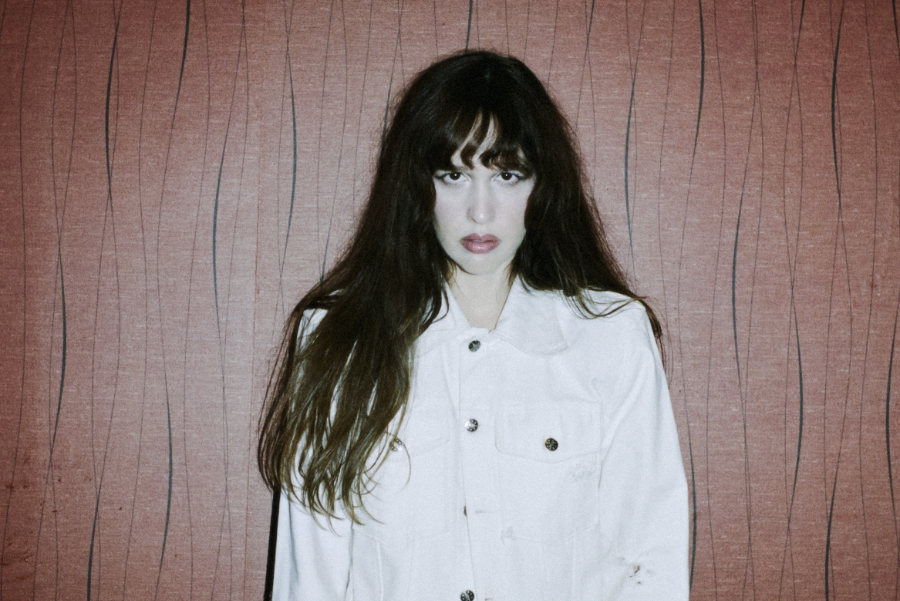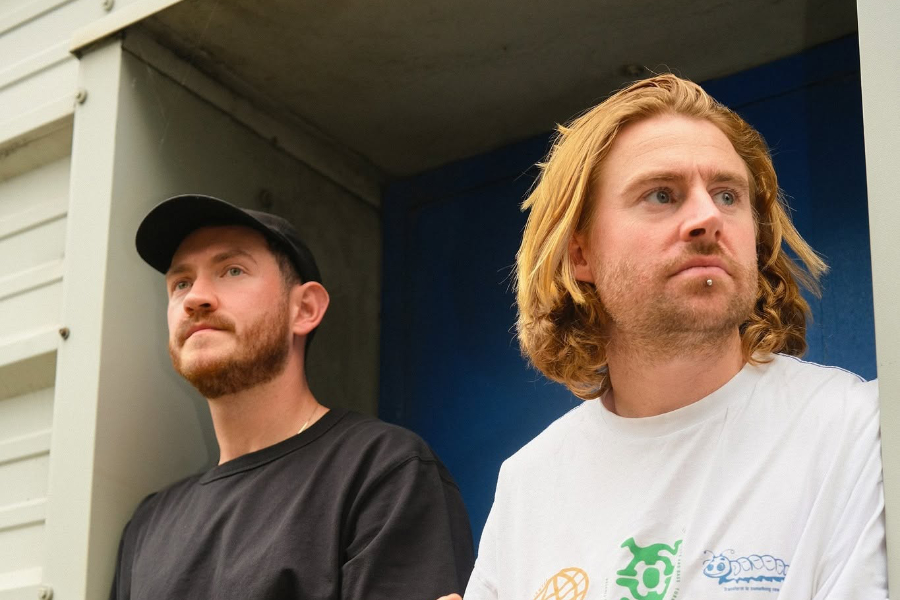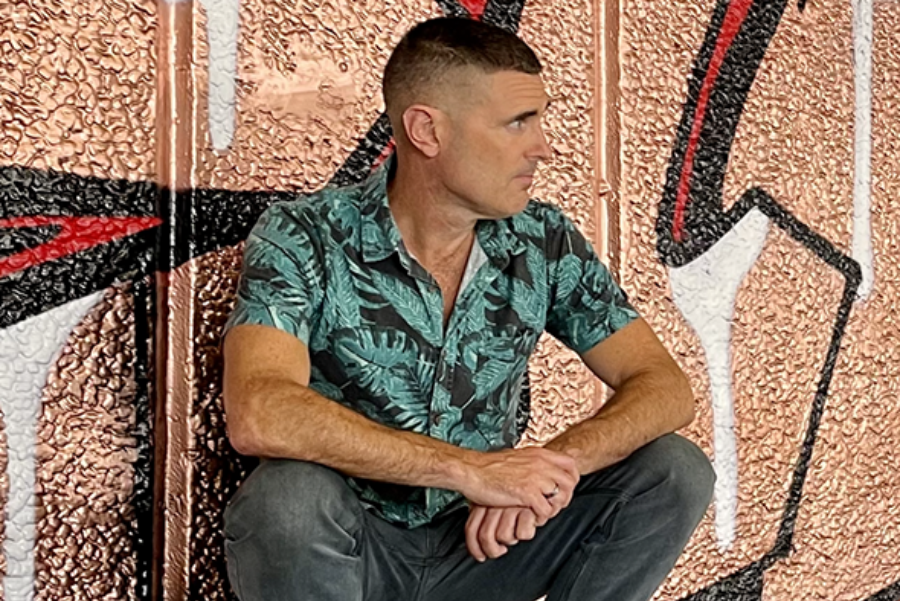
Flatfoot Sam has been immersed in the UK dance scene since the mid 90s, evolving his sound from hardcore to techno to nu-nrg and hosting the Depth Charge boat parties in Southampton in the early-to-mid 2000s. As the first pandemic lockdown hit in 2020, Flatty, as he is affectionately known, harnessed his creative capabilities to develop ‘TripField‘, a new genre that blends trip-hop, leftfield and Balearic beats – think uplifting rhythms and warm, sub-heavy basslines, at or below 100 BPM.
His latest release, on his own Depth Charge Recordings, is Wetiko, with the title described as the ‘native term for the madness of the destructive human condition’. It follows on from his Zeitgeist EP in 2023, and is the latest single from a forthcoming album.
909originals caught up with him.
Hi Flatty, thanks for talking to us. How would you describe your latest release, Wetiko?
Hi there, and thanks for the interview. I would describe the single as a meditative call for awareness of to the human condition. Release is a funny word – I always imagine dumping a load of old vinyl records out of an airplane. That’s also why people don’t ask my opinion about too many things.
Is the single a reaction to the state of the world as it is at the moment?
It is, and the state that it has been for many centuries. What the world is experiencing now shouldn’t be normalised and we should ask ourselves what each one of us can do to help find peace.
What inspired you to create the TripField genre, and how do you define its core elements?
I didn’t set out to. I was after writing some downtempo tunes and TripField was the result. I tried to get my first single signed to a few labels and none of them could fathom the genre. And then I realised that was because it was a new sound of its own.
It partly comes from liking a lot of different styles of music and not being very minimalistic, and chucking a lot into the mix and then layering it to create atmosphere. Korg M1 Piano, 303s, breakbeats and fat basses and lush vocals would sum up a lot of the tunes – but all with a spiritual depth and meaning.
To what degree was TripField inspired by the pandemic lockdown?
Probably only to the degree that I had the time to sit down and write the music. I found lockdown oddly peaceful. I know many didn’t, and there was a lot of suffering, which I empathise with deeply, but as a selective-introvert, I found it soothing.
Before embracing TripField, you were involved in the hardcore scene, both as a DJ in the 90s and early 2000s and through the Depth Charge parties. Did the DIY nature of the scene have an influence on your approach to production?
Massively. You can hear sounds of The Prodigy, Leftfield, Moby, Portishead, Massive Attack – some say Enya too, ha ha – in my music, all of which come from experimental roots.
I’m a self-taught musician, so jamming stuff experimentally is all I know. I love the era of DIY sample-stealing. I have so much respect for the pioneers of electronic music who had such basic studios, relatively speaking, back in the day, and still made tunes like Your Love or Weather Experience.
Wetiko follows on from the Zeitgeist EP in 2023, and the Boathouse single in 2022, both of which were very meditative, almost philosophical releases. Can you share insight into your workflow—how does a track typically come together for you?
Tracks often start with a vocal sample or chord progression, or a chunky rhythm. I just need to feel inspired and get that buzz. I know when I’m there, because I find it hard to stop and get hungry, because I don’t want to stop and eat. For people that know me, not stopping to eat is a big deal. I like food. A lot.
How does storytelling influence your approach to music production?
I find that the tracks flow from a basic concept, and the details of the stories fit the tracks retrospectively. It’s quite spooky how people understand what I meant by the track when they listen all that time later.
What hardware and software do you rely on most in your creative process? Also, the vocals are quite hypnotic in your tracks – are these samples or are you working with specific artists?
I actually don’t use that much hardware, apart from a midi keyboard and Roland TB-303.
Most of the sounds come from software instruments. The degree to which software has overtaken hardware in the last 20 years is awesome, and probably a bit annoying if your bread and butter was selling hardware for studios in the 2000s.
I’ve worked with live vocals, most recently with Laurence toute seule on the Zeitgeist EP, but most of what I use are samples. I like the breadth of choice and variety that is available in world music. I like the sound of vocals rather than what they say, which is why I work with foreign languages a fair bit. Wetiko’s lyrics are in Swahili…I think, ha ha.
Who designs your artwork?
A clever fella called Matt Wood from madenoise.com. We’ve been friends for over 30 years, and he gets the project entirely. I leave him alone to conjure the designs and they all fit the music perfectly.
He listens to the tracks a fair bit and gets into their psyche, and the design flows from there. Take a look on my Insta or Spotify to see all of what he has done for me. I’m lucky to have him involved with the project, he is a talent.
We imagine the TripField concept would work well in a live setting – have you taken your sound ‘on the road’, or do you plan to?
We’re done one live performance in London, but not on any scale. I need to spend some time trying to make that happen. An afternoon set on a chilled stage at a festival would be cool. Or Secret Garden Party-type vibes.
What’s next for Flatfoot Sam, and how do you see the TripField concept evolving in the coming years?
The second album is next up, launched with another single. I’m guessing 2026. Probably a third of it is written so far, so I need to prioritise so more studio time. People often comment that the TripField sounds would work in a cinematic setting, so I need to look into how to get it into the ears of film and series producers.
Thanks to Flatfoot Sam for talking to us. Check out his latest news and releases here.
Check out the top tracks that the 909originals team has recently discovered through Musosoup here. To feature your music on 909originals, click here. 🙂
About Post Author