

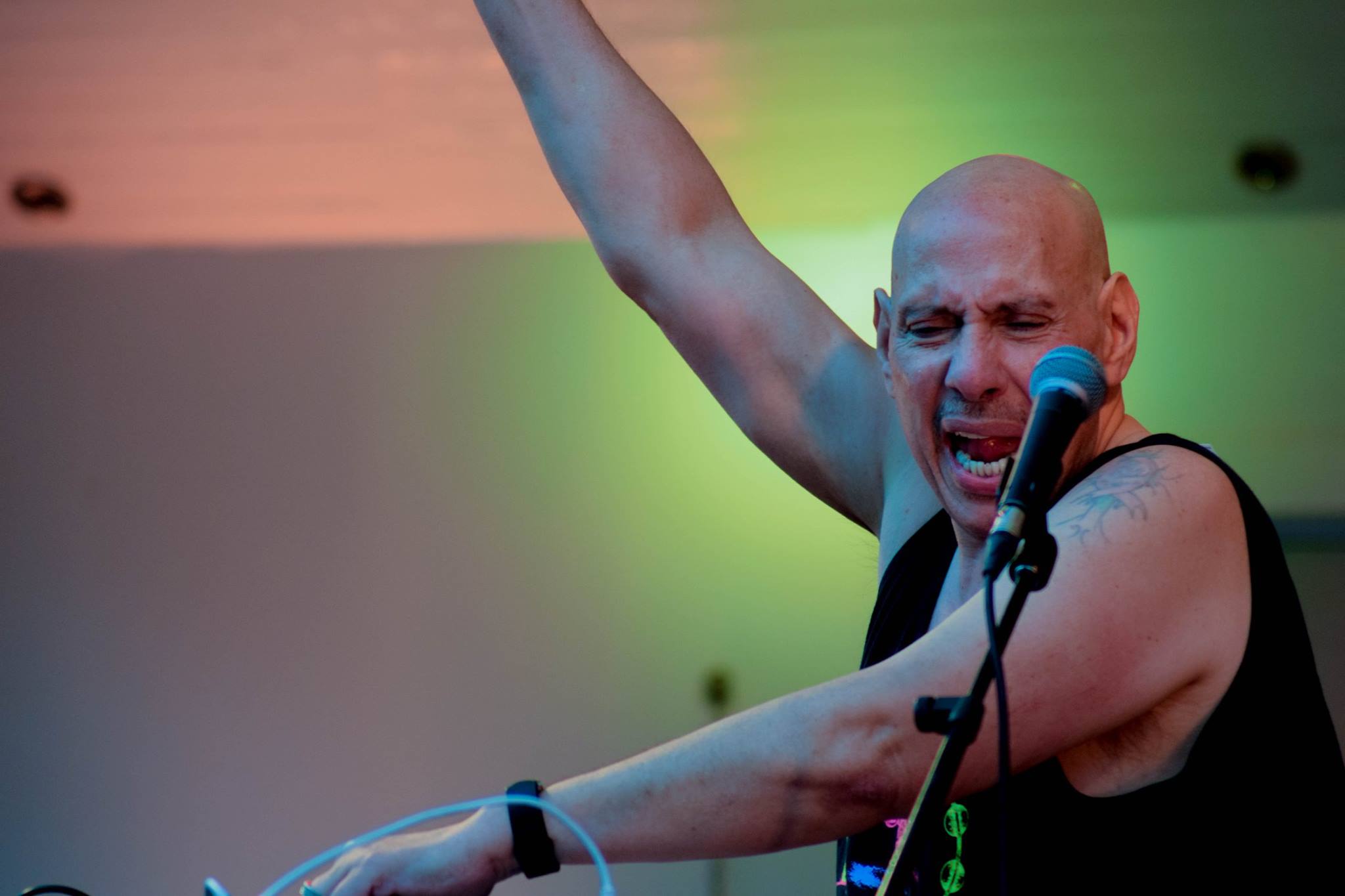
There’s not much that you can say about Nicky Siano that hasn’t already been inscribed in the annals of dance music history – as the owner and resident DJ of Manhattan’s The Gallery, which opened in 1972, he helped light the touch paper for New York’s disco scene, paving the way for venues such as The Garage and Studio 54.
He would go on to DJ at the latter – soundtracking the infamous Studio 54 birthday party in which Bianca Jagger entered on a white horse – and would inspire upcoming jocks such as Larry Levan and Frankie Knuckles, among others.
The excesses of New York nightlife took their toll on Siano, and after a binge too many, he went sober in 1982, quitting the scene to help people with AIDS over a 15-year period. He returned to behind the decks in the late 90s, and since then has brought his infectious blend of club classics and underground gems to dancefloors all over the world.
On 5 October, Siano touches down in Dublin to play at the Dublin Disco All-Dayer, taking place at Orlagh House, Rathfarnham, alongside Daniele Baldelli of Italy’s Cosmic Club, and a host of Irish disco talent. More information and tickets can be found here.
Emer O’Connor caught up with him. Over to you, Emer.
Céad míle fáilte to Nicky Siano of The Gallery and Studio 54, the highly original creator of magical atmospheres, sublimely melodic storytelling, and uninterrupted super toe-tapping, hip-jiggling, shoulder-shaking, smile-inducing dance music.
So, Nicky, are you looking forward to flying back to Ireland to headline the incredible yet intimate Dublin Disco All-Dayer?
Oh, truly, so, so much! The couple of gigs I did in Ireland were off the hook… I remember one really wonderful night in Dublin. Rick Heffernan was my manager at the time, and Rick is Irish—he was born in Cork—and he arranged a gig for me there in a bar.
It just so happened that my two nieces and nephews were doing a semester of school over there, so they came too, along with another niece who was visiting them, and my cousins too. It was a family affair.
The crowd was wild, going crazy, and at the end of the night, there was broken glass on the floor everywhere, inches deep—it was craaaazy! People were just throwing their drinks after they had finished them. It was so crowded you couldn’t move; I felt like the room was shaking!
What year was that?
This was like ’99.
Oh wow, that was when I first started clubbing, actually—a vintage year! And I’m sure you’ve seen pictures of the stunning Orlagh House where you’ll be performing on 5th October, with its awesome views from the mountains to the sea, overlooking the cityscape?
Wow, well Paul [from Fatty Fatty Phonographics, event organisers] told me he was doing something in a big old house, almost like a festival.
Yes, this house is really old. You think your career starting in the 1970s is a while back, but this house was built in 1790 by a Dublin snuff merchant. Have you ever tried snuff?
The stuff you put in your nose? A pinch of snuff? No, I haven’t had the pleasure.
So Fatty Fatty’s crew has been hard at it the past few weeks, blowing up giant disco balloons, installing Klipschorn speakers in anticipation of your arrival on our shores.
Do you know how Klipschorn speakers work?
Ehhmmm, they’re free-standing and have horn-shaped speakers?
Well, this is the thing: Klipsch, who invented them, wanted the bass sound to go as low as possible. Do you know how sound is measured by hertz?
Vaguely, to be honest.
Well, below 280 Hz is low-end, below 200 Hz is bass, and below 20 Hz, the human ear can’t hear it—dogs can.
I’ve heard that, yes.
And most bass horns go down to about 40 Hz. We’ve measured Klipsch, and they go down to 20 Hz in bass. Why they work so well—and you mentioned free-standing—well, they’re meant to be placed in a corner. Then they use the walls of the room as part of the speaker, so the resonating tone goes so low, and that’s why Klipsch made them the way he did, and why they sound so wonderful.
So, if you heard they were going to have the DJ booth in the centre of the room with the speakers all around you, how would you feel about that?
I love that because I’m a sound tweaker. During the song, I like to tweak and change it, and if I’m in the centre of the room, I’m hearing exactly what the dancers are hearing. So, I’ll know that the sound will be right. Now, I’m doing a remix for the very famous Irish band, U2—you might have heard of them?! So, I’ll be starting my set with that.
Oh, that’s an exclusive for 909originals.com—I love it! So, everyone better be down on that dancefloor on time!
You know, U2 did a residency in Vegas in this theatre called The Sphere.
I heard about that gig, alright.
It’s like a round globe, and they did a film of their performance. I was there a fortnight ago, and I saw the film—it’s not a flat film, it’s a 3D or 4D film. I don’t know how they did it—you see the whole person, you see everything, you see all the people in the audience—it’s amazing!
I saw the concert, and I was with someone who had seen them live, and she said, “You just saw the concert exactly the same.” It was phenomenal.
Yeah, you don’t even need to play music anymore—you can just play big videos of yourself, ha ha!
I like U2, but now I’m obsessed with them.
That’s interesting because I read in past interviews of yours that you were a bit put off by performances, saying there are too many bells and whistles with shows. Back in the day, they used to focus on a specific lighting change or a fog or bubbles coming into the room—some sort of special effect that went off and people had to focus on that. Whereas it’s just too much now.
Right, I did say that, because when you’re looking at lighting, you’ve got three kinds of lighting fixtures on the ceiling, and they’re all running at the same time. You can’t really discern when they actually change, or if it’s in time with the music.
Back then, it was one effect at a time, and when you made a change, you noticed it, and it made the impact of the music joining the lights much more in your face. It was like seeing a Broadway show, where the person leading the song has a spotlight on them. So, you’re concentrating on that, and then all of a sudden, the dancers come in, and they kick the spotlight away, and you see the difference. That’s what we used to do—approach it like theatre.
Is that where you got your ideas to bring in specific people for your sound and lighting because you were going to the theatre?
More so for the lighting. Our club sound man was Alex Rosner, and he was one of the best. There were two constantly in competition back then—Alex Rosner and Richard Long.
And you were mad into cutting-edge technology, dreaming it up yourself, I believe?
I built the first bass horn. I said, “I want speakers that just deliver low end,” and Alex said, “Bass horn. I could build you some from scratch,” and they were modelled after Klipschorn—just the low end but upside—and they sounded amazing.
You also brought in spectrum analysation into your room?
Exactly. Back then, it was so cool because they would set up a mic in the middle of the room, and you’d watch on an oscilloscope the curve of the room. It had to look be like a hump, and whatever was off or down, they would move one of the faders on the unit they worked with and correct the acoustics in the room.
Instead of doing an acoustic treatment, you did a fix with the machine. They don’t do that anymore. They say they do, but they don’t really. It’s all in the computer now, and you can do a spectrum analysation, but they don’t do it anymore, and it makes the room sound perfect.
Will you do that with the sound engineer at Orlagh House before you play?
I probably will come in and do a different EQ setting, but no, I won’t go to those lengths—it takes a good amount of time, it takes an hour at least.
Well, we’ll see what Paul does once he reads this article, ha ha. You obviously used a lot of ideas from going to Broadway shows when you were building your own club with your brother, who was an architectural engineer, right?
And from The Loft…
Yes, you were surprised that David Mancuso was operating this little lamp himself at The Loft.
Yes, that impressed me so much. I did the same thing—I made sure that every light within my purview could be controlled from the booth, even the bathroom, which was next to the booth. So, when someone opened the door, the light would flood in. First of all we put a red bulb in there, and then if someone left the door open, I could shut off the light from the booth. I was obsessed.
Are you still obsessed to this day? Does your home system have an intricate lighting and sound setup that you control?
Well, I have these speakers [proceeds to show his home speakers on the video call]. The Bose 901—they’re actually from the ’70s. You see this? Look at how it’s shaped at the back, it’s like a pyramid. There are more speakers behind this, see them?
All tiny little speakers, and what they do is make sound bounce off the wall and out. This is the same kind of setup as the Klipschorn because it bounces like that—the sound goes lower, the highs are higher, and it sounds amazing, so, so good.
And do you have any little private parties in your home to show those bad boys off?
I’ve had a couple of parties at my house—nothing quite like a house party.
No, nothing! And I think you’re going to find Orlagh House quite the house party!
Cool, sounds like it.
Yeah, I went last year, and it was a very, very special day with a quality crowd, top-class dancers, and deadly DJs, so I think you’re in for a treat. Getting back to your story—you’ve obviously been through extreme highs and lows throughout your lifetime. Following your hiatus from the club scene due to your heroin addiction, you got yourself sober and worked as a counsellor for people with HIV. You also did a degree in social work, which is a colossal achievement, might I add! But you ended up burnt out after a number of hard years at it. It must have taken so much out of you, mentally and emotionally?
It did, yeah. Totally burnt me out. As they say in social work, “You’re toast!” That happened to me right before I quit my job. I was still working in the ’90s in Virginia as a counsellor.
Then I quit my job just on faith, and it was faith that carried me because, within a week, François (Kevorkian) called me and said, “Why don’t you play Larry Levan’s birthday party at Body and Soul?” which was the biggest party at the time! And it brought my music career back—it got me playing again. Three years later, I was in Dublin.
When you went back to play at that party in New York, were you in any way apprehensive or afraid of the scene because you’d had such a long break? Were you afraid of temptation?
Oh, I brought someone with me who was also sober, so that wouldn’t bother me. But I’m sober today, and people do drugs around me all the time—I don’t really care. I’ve done enough for three lifetimes—I was a pig. I don’t need any more. I don’t need it, and I don’t want it.
Fair.
It’s just a waste—wastes time and money.
When you were done, you were done, and you got out of taking drugs because you felt it was blocking your music, wasn’t it?
Oh, totally. With creative energy, you have to concentrate and relax to let it in, to open yourself up to that source. When you’re on drugs, it’s impossible—it doesn’t happen. It blocks everything. You have to be clear-headed when you play. I don’t know how I did it sometimes back in the ’70s, haha.
Michael Gomes, who was the head of Prelude Records’ promotions department, used to say, “Nicky, you had a sprained ankle one day, and you were so high, your foot was on the counter, and the record was ending. You reached behind you, pulled out a record, put it on the turntable, dropped the needle down, turned the knob up, and it was just fabulous! You, you had the knack.”
Hahaha. It’s funny hearing those crazy stories from our wild youth. I guess we all kind of level out a bit when we get into our later years, and sh*t gets real, doesn’t it? If you hadn’t gone back to DJing in nightclubs, did you ever flirt with the idea of working in theatre or film instead, maybe doing music, sound, or lighting?
I did, yes. In fact, during the years I worked with people with AIDS, I went to acting classes and did some theatre stuff. So yeah, 100%.
And would you get back into it again today?
Yeah, I want to do this show I do, Hallelujah Disco! Have you heard of it?
I have, yes.
Yeah, I want to do this show. I don’t know. I think we have an opportunity, I’ll see…
Absolutely! I think it would go down really well with the Dublin Fringe Festival audience.
Yeah, I think it would be great in London, in the West End, in a small theatre. I think it would go down great.
I’d love to see it! I’m a big theatre fan myself. You also wrote the script for your documentary Love is the Message: A Night at The Gallery 1977. It was a long time coming, but was that due to funding issues, or was it difficult to write? Did it come together easily?
It was due to funding. It’s a documentary, and I wanted to show The Gallery and highlight the things that happened there. I wanted it to be experiential, not like, “Luca was da da da de na…” No, no, no. You’re just spending a night at The Gallery—you’re going to see people smoking pot, someone doing other drugs, and this one dances all night, and that one’s a booze mat, and that one tells all your secrets.
So, I was dictated by the footage I owned for how it was going to progress and what it was going to do. It took a while to get all the piece. You do a cut, then you have to show people, then do another cut, and another edit. It was more about re-editing to structure it than actually sitting down and writing.
Would you like to do something where you’d have more creative freedom next time?
Absolutely. I would love to do something about my story, but without me in it. Someone playing me, and a woman playing Robin.
Who would you have play you if you could have anyone?
Well, I was seventeen years old, so I’m not sure right now… hmm, maybe Eddie Redmayne?
Or what about your man from Dune, New Yorker, Timothée Chalamet?
He might be good, and he sings, too.
You held the Irish premiere of your film at the Grand Social in Dublin when you played for promoters Nightflight in 2009. You were planning to retire that autumn, but once again, you were enticed back to the turntables with a new residency in New York. That was 15 years ago now…
Ha ha ha.
So, what happened in New York 15 years ago when you tried to retire?
The prices went up!! Everything went up. Inflation made me still have to work. No, look, if I didn’t love it on some level, I wouldn’t still be able to get booked all the time and do all these gigs. People just wouldn’t respond, you know?
It’s about the drive; it’s about the love for the music. And that’s where I’m at—I’m still here hearing the music and building new songs, by U2! A really famous one that speaks to me.
And you must really love playing in Ireland because you returned to play Casa Bacardí at Electric Picnic in 2013 and 2016 with promoter Ro Flynn. Do you get a different reaction from Irish clubbers compared to other countries?
The Irish are the best—they like to partéeeee. I mean, the reaction is intense. They scream, yell, and dance hard—they’re into it. The Irish beat everyone; they really do. Londoners are really good, Manchester is great, but the Irish are out there in a league of their own. They have a little bit of drink, and they’re off to the races. I mean, they interact with me—sometimes I’ll sing the words to the songs, and they’ll sing them back to me.
We do love a good sing-song, he he. Now, you say you love the underground scene and sounds, and I believe you’re working on an official reissue of Dinosaur: Kiss Me Again?
I’m not working on it—it’s done. It’s coming out on Luaka Bop (Records), which was the label David Byrne started. That’s really interesting to me because David Byrne plays on the record, so that’s a pretty amazing full circle.
Absolutely! But you also worked on an unofficial version, a rejig, with the promoters of this Dublin Disco All Dayer, Pablo and Shuey of Fatty Fatty Phonographics?
Yes, that’s the one I’m gonna play when I come in. They reedited it, and they did a great job—I love their edit.
How did that edit come about?
Yeah, they contacted me, and they structured it. Then I did some edits with them, and it came out really nice. Have you heard it?
I have indeed, it’s a beautiful record. And having spent €12,000 on making Kiss Me Again, what did you make of Aslice, the electronic music platform? It was forced to shut down because not enough top-earning DJs signed up.
I don’t know much about the electronic music scene, and I didn’t even know Aslice was up and running, so I’m sorry, I don’t think I can comment on that. But one of my pet peeves is that many producers today are sitting alone in a room, playing everything themselves.
A lot of the time, these producers aren’t musicians, so they’re using a sound as the bass, instead of the bass instrument being a bass guitar, an upright bass or even a keyboard bass, they’re using a drum sound as the bassline in the record. I think that producers should bring in musicians to play parts for them.
That’s what I do, I sing the part to the musician and they play it on the record and it comes out so dynamic with a life of it’s own when you do that.
When you do it all alone in a room, if you’re creating something that event if it’s really good like Calling Out Your Name, it will live only a certain amount of time. 70s music is still living and breathing because it’s live musicians, so it lives, it has a soul, and you can’t get that in a room alone.
I interviewed DJ/producer Joeski from New York, such a nice guy, and he said the same thing. He tries to hire musicians whenever his budget allows, and it brings much better production values. It’s a shame technology has taken over in that respect.
You see, my thing is to use technology to enhance the sound and make something even better but not to take away from what you want it to be. You want it to be as good as it can be. So, I play keyboards but I’m very basic, so I would never play myself on a record, I hire someone to do it.
As you approach your seventh decade around the sun, can you give us any hope for the future?
Next March, yes.
Are you going to have a big, huge party?
Supposed to…
Where will you have it, in New York?
Probably at the Bumper Cars…
Oh, I’ve heard about the Bumper Cars, with the Richard Long sound system on Coney Island?
Yeah, exactly.
I read all about that, that sounds amazing, I have to go to that!
Yeah, OK, why not?
Just to finish, can you give us a glimpse at any gems you have in store for the Dublin Disco All Dayer, for all the deadly dancers as we envision our musical escape, freestyle dancing in a shabby chic boutique mansion party?
Ha ha, well, I’m going to have my remix of a very famous U2 song, one of the most famous U2 songs. But it’s by a different person, which is interesting—Bono sings on it, but it’s by someone else. And Melting Pot by Boris Gardener—it was a big hit in the 70s. I have a version of it by The Roots. And Still Out There is so compelling.
I have a few other great things lined up, and of course, I gotta play Stand on the World because it’s like my anthem right now. And I’m definitely gonna play Kiss Me Again, absolutely 100%. Everything else will be in the moment.
That’s the way we like to live.
I really don’t plan my sets in advance. I have ideas, but it really depends on what comes in when I’m around the people. I’m very sensitive—I can feel energy and hear thoughts. Like someone said, “When I’m dancing on Nicky’s dancefloor, I think of a record and he plays it!”
Divine inspiration.
It all comes down to me creatively.
And tell me this, do you still play sound effects throughout your set?
100%. That’s why I use three decks instead of two, because I have to load the sound effect really quick sometimes, and I’ll be hitting the button. On the CDJs, I can just queue it up and hit it—toot toot toot, just once in a while, toot toot, and then stop it.
So I’ll do that while two records are playing and the mix is happening—toot toot doo doo. People ask, “You really need three?” Yeah, I need three.
Brilliant. Well, Nicky Siano, thank you so much for joining me today on 909originals.com. I really appreciate your time.
Gimme your name again?
Emer, like Emergency, dial 911, Emer.
That’s really good to remember. Thank you, Emer, many blessings on you.
Safe flight, and I’ll see you very soon, big love.
Words by Emer O’Connor. Main photo taken from Nicky Siano’s Facebook page. More information on the Dublin Disco All-Dayer can be found here.
About Post Author


