

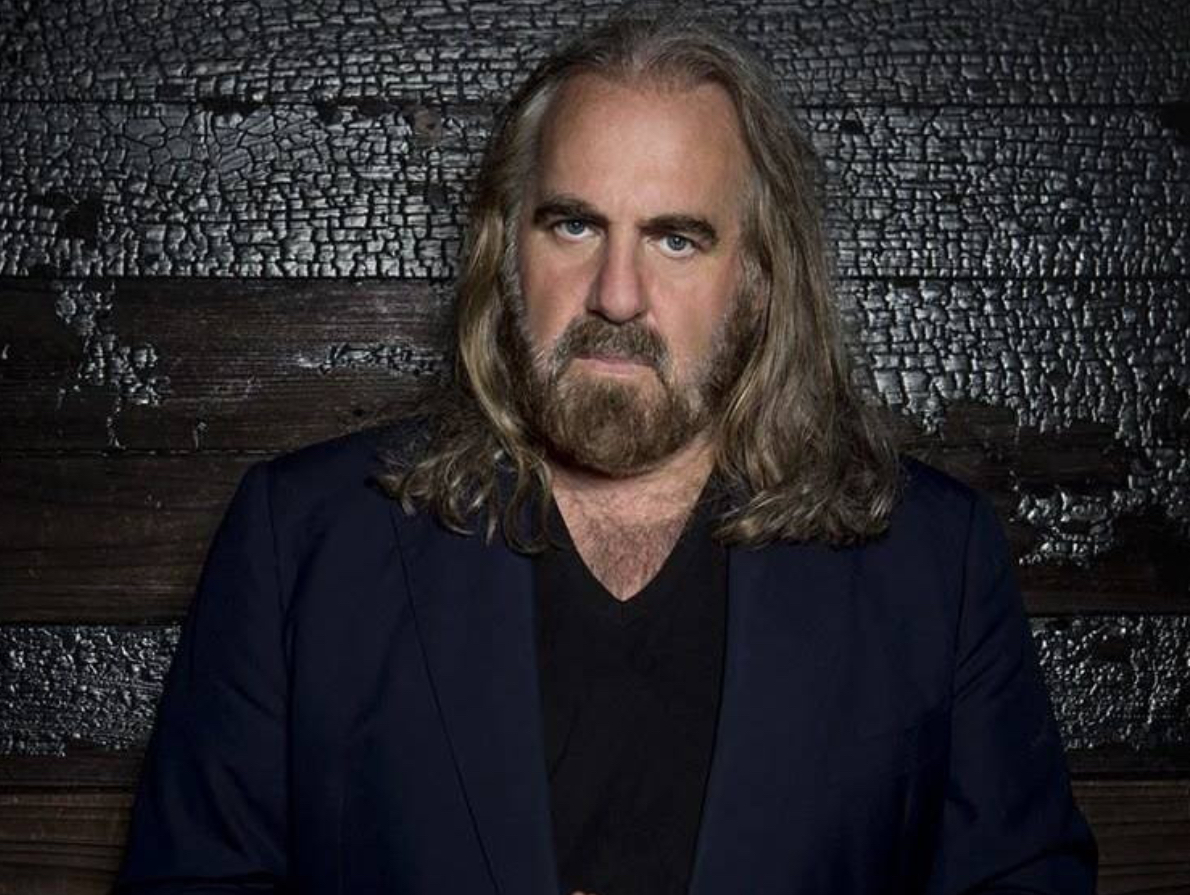
When it comes to remixing and production, few individuals carry as much legendary status as Arthur Baker, best known for his work with Afrika Bambaataa and the Soul Sonic Force, Rockers Revenge, Planet Patrol, Freez and New Order, and for remixing artists as diverse as Bob Dylan, Cyndi Lauper, The Rolling Stones, Pet Shop Boys, Fleetwood Mac and Bruce Springsteen over a 40-plus year career.
A pioneering figure in the electro scene in the early 1980s, Baker’s portfolio of work parallels the emergence of dance music itself. Having started his DJ career in the 1970s, he moved to New York in 1981 to pursue a career in production, quickly earning a reputation as a studio wizard.
As the music industry embraced technology, Baker was at the forefront, shaping the sounds of tomorrow from behind the mixing desk – even to this day, arguably his most celebrated work, Planet Rock, released in 1982, sounds like the future.
Last year saw Baker, who is now based in Miami, release a 43-track compilation, Arthur Baker Presents Dance Masters, on Demon Music, showcasing his classic dance remixes from over the decades, while he continues to be busy on the production front, via recent collaborations with James Hurr (Powder In The Nose), MistaJam (Born To Be Wild), and Mylène Farmer (California), to name but a few.
Last month saw the release of the Sex Machine EP, recorded alongside Steve Mac and released on Jack Said What, which was reportedly inspired by a summer Baker spent in Ibiza, hanging out at venues such as DC-10. Featuring three tracks, Losing You 24, Sex Machine and Beans, it can be downloaded/streamed here.
909originals caught up with him.
Hi Arthur, thanks for talking to us. Let’s start with your new EP on Jack Said What – Sex Machine, alongside Steve Mac. Does it refer to anyone in particular? Who is the Sex Machine?
Well, I came up with the name, so maybe I am, ha ha. But I think Irvine Welsh [author and Jack Said What co-owner] is, actually. He’s the true sex machine.
I had done a track with Sly and Robbie in 1984/85 – we had gone in the studio to recut James Brown’s Sex Machine and it really didn’t work out. I had John Robie and Fred Zarr – two keyboard players I was working with at the time – and it just didn’t vibe. Their bits were not really happening, but the Sly and Robbie stuff was good. So I sort of cut it up 30 years later and started messing around with it.
I was in Ibiza a few years ago, like six or seven years ago. I messed around with it and worked on it. On that trip, I made a lot of tracks – I was going out to clubs a lot. I stayed with Junior Sanchez, we shared a house. I worked on all these tracks and about maybe three or four years ago, I gave Steve [Mac] a bunch of them and he started working on them.
We put one of them out – Losing You – which came out of maybe three or four years ago. And then once he started his label, I kept going, ‘Well, you’ve got those tracks, you might as well finish them and put them out.” And there you go – now they’re out.
And it’s funny, because I actually got a text from A-Trak and he was like, ‘Oh, that track you’ve got out, Beans? I love that track!’ You never expect any of your friends to listen to your new music – they probably don’t even know that I’m making any! It’s sort of new, I guess – it’s from the last decade, anyway.
This summer, I’m going to meet up with Steve in Brighton, and DJ and work on a few more tracks, and we’ll put out a few more, like a follow-up.
It’s fun. I’ve been making new music – not that much right now because I’ve been working on other things – but It’s more the motivation to have a way to get it out and to get someone to help me finish it. I can start stuff, but getting things finished is fairly difficult.
You’ve been doing a lot of collaborations over the past few years it seems?
Well, I did the track with James Hurr, Powder In The Nose, which was pretty slamming. I have enough fairly recent tracks that I could go and play an hour set just playing stuff that I’ve done in the last couple of years.
I don’t have an agent or anything, so I’m not really getting booked that much. But I did a Yard Act remix, Trench Coat Museum. That’s only on vinyl. They’re doing really well, and they’re actually breaking out over here too, so that was a cool remix to get asked to do.
With these tracks, are you taking the same approach as with that Sly and Robbie loop? In other words are you digging into your archive to come up with something new?
I have so much stuff sitting around in my hard drives. I’ve got a killer coming out – a track that could be very big. It’s more commercial than these things, basically it’s a disco loop of something I did back in ’78 and I’ve just cut it up and worked on it.
I’ve got a great singer who I found on the internet, who had been brought to my attention by Questlove. He was putting some of the guy’s stuff up, and I was like, ‘this guy sounds great’, so I contacted him. That should be out by the end of the summer – it’s more like a filtered disco track.
Sampling your own stuff is great, if you have it. I mean, there’s no reason not to, and I do have a lot of stuff that never came out, and that works as loops now in samples.
It must be somewhat autobiographical when you dig up some loop from 1978, and you’re like ‘oh, that was the day that we did this’ or ‘that was the session when this happened’?
Yeah, it is like that. I also just finished writing my memoirs, going through all my old memories and all my old tracks. I pretty much saved everything. I have all my old multi tracks, so I can sort of piece together what was happening.
Then, when I’m going back, and I’m examining it for the book, it gets me going ‘why didn’t I ever put that out?’ I’ve got literally a hundred things that are pretty much that, they just never came out.
You work on it a lot, and then you lose the feeling that it could do something – you sort of lose your mojo on it. When you work on something for a long time, you start to think ‘maybe this is shit’. I mean, there’s a few that I’ve gone back to, and went, ‘God, if I had put that out then…’?
As a matter of fact, there’s one out now on Dave Lee’s label, which is Can’t Put No Price On Love. He’s put that on a vinyl EP. It was on my compilation with Demon, but it was never on vinyl. So he said, ‘I want to do it on vinyl’, but I didn’t have the multi-track on it. I did have the multi-track of these two North End tracks that never came out, however.
So he went in and mixed them, and so now there’s a North End EP with two never released tracks, and then the other track was never released on vinyl. If you have the opportunity and someone wants to do something with it, then it makes sense, you know?
That’s incredible – that must have been 1979 or something like that, and you still have this stuff filed away?
I had the multi-tracks from Kind of Life and all these other tracks I cut with the first sessions of North End. Then we did Happy Days – that was signed to Emergency – and they took the multis.
Then they got signed to a label in Canada that we won’t speak of, that own so many of the rights, or claim to own the rights of certain tracks. But they don’t even have the multis. If they did, they’d probably do something with them.
When is your memoir coming out?
I got a publishing deal with Faber & Faber in the UK. The book will be out next year, 2025.
How did you manage to fit your whole story in one book?
It’s funny you mention that, because I wrote 160,000 words and they said, ‘oh, we only really wanted 100,000, or 120,000’. So now that they have an editor on it, we’ll figure it out and see what needs to be cut out.
Okay, so we’re going to get an extended mix of the book, maybe? A 12-inch mix?
Yeah, exactly – I’m thinking of doing that, an extended book version, with music and stuff.
I believe you’re working on a documentary as well? Or is that already out?
Yeah, I have a documentary made, I’ve filmed it over the last five years. It’s on Rockers Revenge. Basically, I sort of ran out of money on it. I thought I’d be getting a deal for it, which I haven’t. So this summer, we’re going to do a few screenings to try to get people interested.
I think we’re probably going to do one in London, and one in Montreux at the Jazz Festival. It’s sort of a human interest story. It starts out as a music doc, in the 80s in New York, telling the story of how we got together. Then it sort of shifts, and the second half becomes a real human interest story.
Are there going to be any Rockers Revenge gigs on the back of it?
Well, that would be nice. We did some gigs two years ago – we played the Jazz Cafe in London. That was the first time they had ever made it to the UK. We did a few gigs, but I had expected that the film would be coming out.
We made a record – we have an album – and about three years ago I dropped a track on Crosstown, which was called On A Mission, and then a couple more on my label, Baked. We put out three tracks over the last four years.
There’s a whole album, and it would be nice to have it come out. But I really want to put it out with the film. So it’s not the right time.
You mentioned the compilation you released last year, Arthur Baker Presents Dance Masters: Arthur Baker. Obviously the previous one you did was with Shep Pettibone, a couple of years ago, and then you turned the mirror on yourself, as it were. Are these going to be part of a series – there are so many legendary remixers out there?
Another one did come out actually – but you probably don’t even know, because they didn’t really promote it at all. It was a John Luongo compilation. It was really good, but I guess they didn’t market it very well.
John Luongo is one of those guys that people in the game would name check. Like yourself, Francois K…
John was the man. He did Dan Hartman – Relight My Fire. He did The Jacksons – Blame It On The Boogie and Shake Your Body Down. He did Gonzales – I Haven’t Stopped Dancing Yet. In that first wave of disco, in the mid to late 70s, he was the guy.
That’s why I did his, because I figured he should really get the credit. He was the first guy doing overdubs on the tracks. Before that, nobody added anything. Tom Moulton didn’t add anything – he did the arrangement and was really good at that – but John went in with a percussionist and sound effects. He was the first guy to do that.
And then he had a big profile in the UK. He did a lot of indie and rock stuff.
Did that compilation come out before the Shep one?
No, it came out after me, but they sort of blew it. They rushed it out after mine for some reason. I don’t know why they did that. At one point they were going to have me come over and do a thing at record shops with all three of them, to promote the brand, but they didn’t do it in the end. So mine and Shep’s did well and John’s didn’t.
With the Shep Pettibone compilation, were you trying to tempt Shep to get out there again? He has kept a low profile for some time…
Well, I tried to, but he didn’t want to do it. He approved it, of course. I mean, it isn’t like he’s a recluse – he has his own motel and he DJs there, so it isn’t like he’s locked away somewhere. His manager was cool and she said we could do it.
But the John Luongo one is really good. I mean, he was remixing Queen, he was remixing all these rock bands and doing a lot of really cool things.
Would you say that John was sort of a starting point for you, in terms of remixing? He pre-dates you by a couple of years…
He was the starting point for me, because when I first decided I wanted to be a DJ, and I was living in Boston, he had started the first record pool probably outside of New York.
He also had a magazine called Nightfall, which would run the New England Disco Awards. Before anyone, he was doing an awards show – the first couple were good, but for the third one, he had The Tramps, Donna Summer, The Village People KC and the Sunshine Band, and all the producers – Baker, Harris & Young – they were all at this thing in Boston.
When he moved to New York, he got a label deal with Columbia right away, because he was doing all the remixes for them, So it really inspired me that someone I knew had gone to New York and been successful.
Because in Boston, there wasn’t much happening at the time, right? At least not to the level of New York or Philadelphia, say?
That’s not true. We had super talented DJs, like Jimmy Stuard, who ended up going from Boston to New York and then dying in an infamous bathhouse fire there. He was starting to take off as a remixer. And then the other guys, Joey Carvello, Danae Jacovidis.
At the same time, nobody was making records then – I was the first guy to make disco records in Boston. There were all these great DJs and me, I wasn’t a great DJ, but I aspired to be a producer, to make my own music. So that’s what I did.
I didn’t go to New York to be a DJ. I went to New York to try to make records. So then you had Murray Star with New Edition, and the Johnson Crew. Things were coming out of Boston, but it wasn’t until me and John moved to New York I guess that people started hearing about it.
Of course, it wasn’t Philly or New York – as far as making records, it didn’t have that. It was more of a rock ‘n’ roll town because we had J Geils, The Cars, Boston, Aerosmith. We did have quite a few big rock acts at that time.
We put out a request for questions, as you know, and one that came back was about the TJM album. That was right at the start of your production career, right? And it’s one you got burned on…
I had worked on a few other things by that stage – I did that record called Losing You by the Hearts of Stone. I got the money together and decided I was going to make an album. I wanted to make an album like The Tramps, or Gamble and Huff. So I met some keyboard players and musicians and we made an album.
So people ask, ‘how did you get involved in that TJM album so early in your career?’ But the question should be ‘how did Tom Moulton end up ripping me off?’
As regards my feelings about Tom on a business level, I can separate them from his talent as a remixer. He was the best – his records, to this day, sound the best. The thing is, though, with that record, he didn’t produce it. He remixed it.
On my radio show today, actually, I played my rough mix of I Don’t Need No Music. And it sounds exactly like what he put out, except he took one singer off, and put Ronnie Tyson, his guy in Philly, in, but other than that, it’s exactly the same.
I would have had no problem with him taking production credit with me, but literally when that record came out and I listened to it, I was like, ‘come on!’.
He keeps thinking that I got all this money from it. He won’t even give me the stems of that stuff. He’s giving those stems to f**king everybody and their grandmother to do mixes and shit, but he won’t give me the stems.
You can quote me on this – he’s cranky and petty, but he’s also an incredibly talented person. I have no problem saying both. Anyway, I made the record. I have all the backup, I’ve got all the papers.
This happened quite a lot back then. We did an interview with Wes Green, who made a track called Computer Madness, and he said that Steve Poindexter took it and released it, without barely making any changes to it. Would you say you were naive at the time, Arthur?
I was 23, you know? I was this kid. I didn’t get any points on it. I got nothing. I got like a third of the publishing, and my songwriting, and that was it. And he’s still f**king bitching about it, ha ha.
Why don’t you tell everyone who produced the f**king record, you know? I’ve got the the rough mixes. On my radio show I could be like, ‘Tom Moulton did a great remix of that track, I Don’t Need No Music. Here’s the rough mix, see if you can tell the difference…’
You mentioned North End – Happy Days. What’s remarkable about tracks like that, Tom Tom Club – Genius of Love is another one, is that it’s all played live. It’s something like eight and a half minutes, and it’s entirely live. Obviously when drum machines and synthesisers came in a couple of years later, you were able to simplify that process…
Well, TJM was all live, too.
That whole ‘lost in the groove’ thing was very important to you early on, even if you didn’t have the technology?
For sure. The bottom line is, you were relying on the musicianship of your players. I found a few good musicians who understood what I was trying to do, and then when I moved to New York I found some other guys, as well as bringing some of the guys from Boston. There was a great guitarist – Andre Carriere – he played on all that stuff.
Then when I moved to New York, one of the last records I did with live instrumentation was Jazzy Sensation. We also did Jazzy Rhythm, which was another Michelle Wallace track, and It’s Right. The Michelle Wallace records were all cut live.
And then the next phase was obviously doing Planet Rock and Walking On Sunshine with drum machines.
When you research ‘Arthur Baker’ it’s hard to avoid Planet Rock, and I think you’ve probably been asked every question under the sun about it – but I’ll ask anyway. Today, looking back, is Planet Rock a bit of an albatross around your neck, in that people keep bringing it up? Or, is it one of the proudest things you’ve ever done?
Obviously I don’t mind being referred to as having made Planet Rock, you know? I don’t mind that at all. In writing my book, that was how I started the chapter. I mean, where do I begin with something that I’ve talked about more than anything in my life? What do I have left to say about it?
One of the reasons I’m proud of it is that there are production values in there that we came up with at the time that were sort of different, and now they’re staples. On a production tip, I think it really was really a game changer, not just because of what the track was and the music but also some of the tricks in the production.
The thing was, I was mixing it like a dance record. I wasn’t mixing it like a rap record. The rap records of the time were tracks like The Message and The Breaks, and Rappers Delight, and they weren’t really mixed as dance records. There might be a little bit of that, but I wanted to make a record that was for the clubs.
So that was my approach, to mix it as a club record – even to the point that the instrumental of Planet Rock busted out in New York before the rap version. And then they got bored of that, so they started playing the rap side.
But other than rap radio, the clubs were playing the instrumental first, that’s for sure.
Ok. Obviously with Jazzy Sensation, that was a more traditional kind of Rappers Delight type formula, and then Planet Rock comes along…
We did two different versions of Planet Rock – the other version has totally different music.
I’m right in thinking the rappers didn’t like the the backing track for Planet Rock? What was their objection?
Well, it was like nothing they had really heard before. They wanted something more like Jazzy Sensation. They thought it was too fast – or too slow – because you either rap on the beat or off the beat. They had lyrics and they couldn’t get it. And then G.L.O.B.E. said, “let me take it home, I’ll come up with something different.” And he came back with what he famously called MC poppin’. We’re not rapping, we’re MC poppin’.
So that was his idea – he rapped off the beat, like to the half time. But it worked, because if you tried to rap right on the beat, that was 128 bpm. It was a lot easier to rap to 64 than 128.
You said it there, 128pm. That’s your typical house music tempo. That was very different to what was going on in rap at the time.
People danced to it half time, you know? It wasn’t four to the floor. It was just a different groove.
I’m sure you’re going to go into this in your book, but when did you first hear Trans-Europe Express, and what did you think of it?
I heard Trans-Europe Express when it came out, three years earlier. I was living in Boston. I had been a fan of Kraftwerk when I worked in a record shop there. When Autobahn came out, it was a pop hit in America. It sold millions. It was a huge record in America.
So I knew of the group, and then when they came out with Trans-Europe Express, I was like, ‘wow, that’s cool’ because Autobahn was almost like a novelty record, right? So, I heard it in Boston and then when I moved to New York, I would hear it in the parks. I thought that was sort of weird, that all these kids were into the track. And then Bambaataa was into it.
So, Bambaataa and Tom Silverman [of Tommy Boy] had an idea, let’s use Trans-Europe Express. And then I was in a record shop in Brooklyn, and I heard Numbers and I said, ‘wow, we should use that beat‘. Numbers had just come out at the time. So that’s what we did.
One more question about Planet Rock. There’s a bit in there where the rappers – for want of a better term – f**k up the lyrics. “Zzz zzz zzzz” etc. And you left that in! I was wondering what the story was with that, why was it left as it was?
That was a case of Tom Silverman going ‘wow, that’s amazing, keep it’, so we did. If he hadn’t, I probably would have taken it out – that’s the one hook in the song I can’t claim anything to.
After Planet Rock, was there pressure on you to try and follow it up? I read somewhere that Play at Your Own Risk was done in the same session, was it?
Yeah, and it’s the same drums. The same drums are on Planet Rock and Play At Your Own Risk.
So, was it planned to be part of a series then? That Play At Your Own Risk would be a continuation of Planet Rock?
No, that wasn’t it. When I was doing Planet Rock, we recorded a lot of additional music that we didn’t use in the mix. We did another string melody in case we were getting sued, so we could replace Trans-Europe Express with this other melody. We had piano, we had clavinets, we had all this music.
At one point, I thought I was gonna use it for Planet Rock, and then there was no room for it. I had the tape with 24 tracks, there were eight of the drums and then there was the music, which became both Planet Rock and Play At Your Own Risk. Then we made a copy so we could erase stuff and add new things.
Planet Rock became a huge hit. I had taken an instrumental version of the music that we cut that first night, and did a mix of it. I had it on a quarter inch reel and one night I brought it down to the Fun House [legendary New York club], and said to Jellybean, ‘I’ve got this other mix of Planet Rock, with all the music on it’. He played it and people went nuts, because it was very ornate.
So I went, ‘shit, let’s get some vocals on it’. And we got in some guys from Boston, who became Planet Patrol.
Tom Silverman came up with the name Planet Patrol, as the ‘band behind Soul Sonic Force’. Basically, on Planet Rock you see ‘music by Planet Patrol’. So I got the singers in from Boston and we recorded the vocals – me and John Robie wrote the lyrics and sort of fed it to them line by line.
We did the vocals in one really quick session, and then we remixed it, and that was Play At Your Own Risk. That was the easy bit.
So you didn’t offer it to Afrika Bambaataa and Soul Sonic Force at all?
No. We were doing a version that was a totally different song. We just used the same drums.
Actually, I do have one more question about Planet Rock. That kind of ‘whump’ sound that’s at the start, you know, it’s almost like a kind of reverse drum. It was used in lots of other tracks after that. I mean, New Order used it.
You mean the orchestra hit?
Yeah, the orchestra hit. It’s been in lots of other tracks, but I think that that’s the first time I had heard it. What instrument was it?
Yeah, that was the first time that it was used on a record. It was an orchestra hit on the Fairlight. We had a Fairlight synthesiser, and you couldn’t really even sample on it. You have so much more sampling potential on the worst smartphone now, but at that time, it was the state of the art, and there were samples on it. They had explosions… no chords really, just sounds.
Tom was going through it and hitting things and then the sound came up, and we were like, ‘we’ve got to use that’!
I had done a record called I Want To Get With You, which was by a group called Ritz. At the beginning, there had been a repeating horn hit, so I recreated that with the orchestra hit. That was the concept.
I think, chronologically, the next time I heard it was at the start of Bizarre Love Triangle?
I had it on Freeze – IOU. It’s on Loleatta Holloway – Crash Goes Love. We used it on everything. I mean, everyone used it, but we were definitely the first. That’s for sure.
You mentioned something interesting there about bringing the reel in to Jellybean to play in the club. Were you doing a lot of that at the time – working on these projects, often unfinished, and ‘testing’ them in the club?
It was sort of my home base. I could play stuff there.
If you look at the video for Confusion, that shows me bringing the tapes in. I was lucky that Jellybean trusted me, he would just throw it on. It was amazing. It was like having a 3,000 capacity club to test your records in.
Moving on to your work with Freez – that was a totally different angle for you, wasn’t it? Obviously with rap at the time, samples and loops were par for the course, but for Freez, it was a whole new direction for them. They were a jazz funk group...
They had been sending me demos and I never even listened to them. I was really busy. Then they showed up at my office, and I felt bad for them because they had actually flown over from the UK. So I said ‘okay, we can do it’ but we had to start writing the album from scratch.
So I put them into a writing room out in Brooklyn, and basically we worked on the whole album. IOU was the last track we did. I mean, I felt that after IOU, I was like ‘let’s start the whole album from there, let’s trash the whole thing’.
I mean, Pop Goes my Love, that was pretty good, but the rest of it was very different. Some of the stuff sounds good now. And then John Rocca, of course, did I Want It To Be Real, which went from where IOU had been and took it further, with tracks like Once Upon a Time and Move. He made some really good records after that.
Was it around that time that you started working with New Order?
New Order came right after Freez, they were actually waiting for me to finish Freez to work with me. Freez was taking longer than expected. New Order were in New York for a month and then we only got to really work for 10 days or something because I ran over.
How familiar were you with New Order at that stage?
I knew about Joy Division and I knew some of the records they had made. We went in, and I worked on the 808 beats, and they wrote on top of it. I came up with the core ‘Confusion!’ – you know, the shout. Then we sat around and wrote the lyrics together. It was a real collaboration.
That’s what I liked to do – and that’s what I did with Freez, too. When I was producing records at the time, I wanted to be more like a band member and not like a producer. I was more comfortable going in and writing new music with them. Because a lot of the time, bands would bring music in and I’d just get bored with it, you know?
I guess New Order had an idea of what they wanted, and then you stepped in?
I don’t think they did. They just came over to work with me and to make something. They knew the records I had done – Planet Rock and Walking on Sunshine were both huge hits in England.
Hooky [Peter Hook] always said that New Order expected me to be a flash producer and I expected them to be a flash band, and we were both wrong, ha ha. But we made some good music together.
On foot of that, you went on to do remixes for Cyndi Lauper and Bruce Springsteen and artists like that. You must have had labels coming to you, saying ‘can you made this sound like Planet Rock’?
The Cyndi Lauper remix was my first remix for a ‘rock’ act. They just wanted me to use the gimmicks and make it fun – Girls Just Wanna Have Fun, you know? And then, from there, the remixes kept coming. Obviously Bruce Springsteen didn’t want me to make his track sound like Planet Rock. Most labels didn’t – they just wanted me to make it so it would get played in the clubs.
Planet Rock, IOU, and Walking On Sunshine were all big records. They had a similarity, but one was a rap record, one was an electro-pop record. And then Confusion was sort of a grungy hybrid.
Most artists wanted me to make tracks that worked in a club. I had four or five hits in a row – if you include New Edition Candy Girl – before I was being offered remixes. By 1983, before Cyndi Lauper, I had four huge records in the UK, and American A&R guys always looked to the UK.
Then, after that, I’d say the remixes in the UK didn’t really start till 1986, that’s when I started getting a lot of remixes. I definitely got remixes in the US first.
That’s interesting timing, given that the first tentative signs of what would become acid house were emerging at that time – where sounding ‘good in the club’ was obviously a pre-requisite. So you were the right man at the right time, in a way?
I had already taken that approach. I always say, what Chicago did, and what the Chicago-London combination did, was it made it possible for DJs to play in other countries.
Before then, DJs weren’t brought over to DJ in England. All those house tracks were pop hits in the UK. So they were being flown over and then they were DJing in the UK. But before that, the big New York DJs didn’t really travel. They had their residencies, so they couldn’t just leave for a weekend.
I guess the Chicago DJs were the first to travel like that, and then the DJ becoming an artist came on the back of that. And then, you know, it was all Chemical Brothers, Fatboy Slim, all that stuff took off after that.
But always, my theory was that the Chicago DJs having pop hits, like Move Your Body, is how the whole DJ culture of traveling and everything got started.
That period saw the ‘remixer’ positioned more front and centre – you’d see the likes of Ben Liebrand and François Kevorkian become more widely known. Was that something you experienced first hand?
When I came over to London – the first time was 1987 – I hadn’t really done remixes over there yet. But on the first trip, I did something like eight! I was there for three weeks and I did a tonne of remixes.
Let’s touch upon some of the other questions that people sent in. About Walking On Sunshine – did Eddy Grant, who recorded the original, approve of your version?
Yeah, Eddy and I are friends. After it came out, he was super happy. It sort of relaunched his career. When he came to New York – I think it’s when he had Electric Avenue out – he played at the Ritz Club, and I went to the gig as his guest. He gave me an amazing shout out from the stage, thanking me for doing Walking on Sunshine, and how much it hit in America.
He’s actually in the Rockers Revenge film. He talks about how our version of Walking on Sunshine really helped him.
Was his version of Walking On Sunshine well known when you decided to record it?
The Eddy Grant version did very little here. Ok, it did have some sort of a following – our decision to cover Walking on Sunshine didn’t just come out of nowhere. Club people knew it. It had been out for three years, so by that stage it was old. It wasn’t like I did a cover right off the back of it being out there.
We also got a question about the breakbeat scene, which you got quite heavily involved with in the early 2000s. I remember there was a compilation on Perfecto, Breakin’?
I had a Perfecto compilation, and then I had a radio show on XFM called Baker’s Dozen. I played a lot of nu-skool breaks. I met Rennie Pilgrem and we hit it off. We started making records together, and then I met Meat Katie, DeeKline and all those guys. They were really funny guys and interesting characters. So I did that for a couple of years.
I heard that UK garage has come back in a big way now and I’m wondering when nu-skool breaks is coming back – I’ve got two or three tracks that I never put out that are absolutely rocking. So I’m waiting for that to happen.
Yeah, it reminds me a bit of speed garage – it kind of came and went in the space of a few years. There’s still people doing breaks, of course – some of the drum ‘n’ bass that’s out these days borrows a lot from that nu-skool break scene. Another question, any plans to reopen the Elbow Rooms?
None whatsoever. Unfortunately. It was great, but yeah, no plans.
We did an interview with Jon Carter recently. He did a similar thing to you, where he parked his music career and opened bars and retreats and all sorts of things.
Yeah, but I kept making music. His places were more successful, too.
How did the Elbow Rooms thing end?
We had a shooting at the one in Chapel Market. After that – a guy nearly died – we had to shut it for a while, and then the insurance went up. That’s what killed it, because if that hadn’t happened we probably would have had a few more years. We would have sold it at a high point as opposed to a low point.
Did you lose a lot of money on it?
Well, we ended up making a little. I got my investment back and I made a little bit of money. I didn’t really clean up though – I would have if we had had it for a few more years.
There’s another question, ‘What project are you most proud of over your career?’
I’d say the Sun City project, Artists United Against Apartheid.
Interesting. There’s an incredible version of that track on the remix album you brought out, which is nine minutes long or something, and it just breaks everything down. You don’t even know whose vocals are there half the time.
Everyone’s in there. Yeah.
I’m going to twist that question a little bit. Were there other projects in your career that you thought ‘This is gonna be brilliant. I’ve really nailed it here, this is great’, and then it does nothing? Every producer has low points and high points, as well as high points that aren’t recognised as such.
That’s a good question. I did a band called Pink Grease that I thought was really going to do well, that was around 2003-2005, when I was doing the Return To New York parties. I really thought that was going to do something and then it didn’t.
But the thing is, I have really bad ADHD, so for me finishing an album is really difficult. I would be trying to finish it and then by the time I did finish it, I wasn’t that into it anymore. That wasn’t fair to the artist.
I often tell artists ‘I don’t really want to produce your album, because while I like your music, I’m gonna get bored, and I won’t be able to to do the right thing by it.’ That has happened quite a few times unfortunately.
There must have been other stuff that you put out that you thought, ‘actually, I’m not really happy with that’, and then it takes off.
I’ve had a few. This new track I’m working on, with the sample, I think could be really big, but it probably won’t be.
Yeah, I’m not really sure if there have been things that I really thought we’re going to hit and then they didn’t. I have pretty good instincts. But there were a few albums that I did that just didn’t work out – I did a band called Sensor, which was sort of punk funk, sort of like Rage Against the Machine. They were a UK band.
We did an album and it didn’t work out, but it’s not like I thought it was going to be huge, you know?
To close, obviously you’ve been making music 40-plus years now. You’re still remixing, still producing, still have a hunger for it. A lot of people in any walk of life would eventually get tired or say, ‘okay, that’s my lot now’. So what is it that keeps you motivated? What is it keeps you wanting to push yourself when it comes to music?
Well, looking for that perfect beat, ha ha. The next one is always going to be the one that people are going to love.
But then again, I do it for myself too. You know, it isn’t like I do this for the money, because you don’t make money from it anymore. So it’s more a case of having fun.
I’ve been making records for so long, but it doesn’t feel like it’s been that long. It still feels fresh to me. And I do a lot of different types of music and I’m always trying different things.
I’ve been working on a rhumba album – it’s sort of Santana meets War meets the Last Poets – and it was recorded with a bunch of local musicians in Miami. When people listen to it, they can’t believe it’s not some old Eddie Palmieri record. It’s cool to be making new music that sounds really old, but also fresh at the same time.
Thanks Arthur for talking to us. The Arthur Baker & Steve Mac – Sex Machine EP can be downloaded/streamed here. Keep up to date with his latest releases here.
For all the latest news on techno, house, and rave culture, features on the hottest nightclubs and interviews with the world’s best DJs, make sure 909originals is your go-to source. www.909originals.com
About Post Author


