

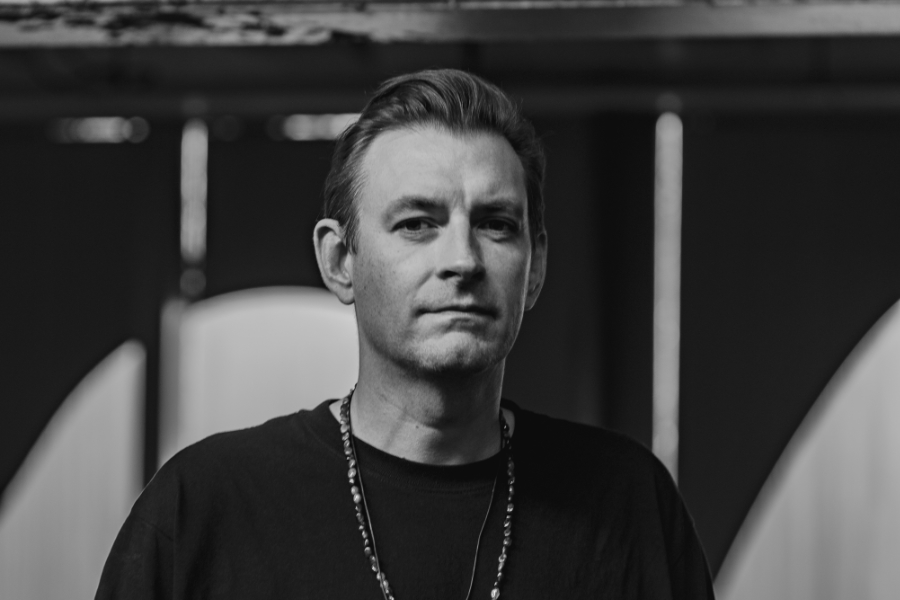
Joel Mull has been a constant presence on the techno scene for three decades now, rising to prominence on Stockholm’s rave scene in the early 90s, before going on to be a key figure in the ‘Swedish techno wave’ alongside artist such as Cari Lekebusch, Robert Leiner, Adam Beyer and Jesper Dahlbäck.
He’s released under various identities over the years, including Gotzkowsky, Damm and Icarus, and this month sees him revive the Icarus moniker – now updated as Ica Rus – for a new album on Motto Sono Records.
The nine-track album, This Way Home, has just been released, and can be downloaded/streamed here.
909originals caught up with him
Hi Joel, thanks for talking to us. We first came across your ‘Icarus’ identity in the late 90s to mid 2000s, with a few vinyl releases on Jericho. What made you decide to return to the Icarus moniker?
I create a lot of music, and the Ica Rus alias is one way for me to divide these different styles of tracks. If I was to explain Ica Rus, it leans more towards house and has a deeper, soulful, and perhaps more free-flowing feeling — and is easier to listen to as well, compared to my techno side of things.
Thanks to Cari and Miia [Magia] at Motto Sono, I’ve found a really good home for all of these Ica Rus cuts. We already have a few releases under our belt, and more to come. It’s a true pleasure and a privilege to be able to just do music and not focus on the ‘shopping around for labels’ work that can get very nerve-wracking and stressful.
I’ve worked with Cari since back in the beginning of the ’90s on so many different projects, and we are family. He is the big brother not just to me but to many others, and it gives me so much energy to work towards something together. We understand each other so well, and things run smoothly.
By the way, perhaps you have noticed that I use a blank in between the name — Ica Rus.
I had to change the name because there were so many Icarus artists popping up, and it got confusing. There are a couple of electronic/house acts under the same name these days. So I decided to bow out and make a change. I was, to my knowledge, the only one using the alias back in the ’90s, but I do understand it’s not the most unique name. 🙂
The album is called This Way Home, and there are references to the Swedish forest, with titles like Bjorkarna and Kottarna i Skogen. Do you see this project as a ‘return’ to your musical origins in Sweden?
It’s nice you picked up on that, and you are not mistaken. I live close to a big forest and nature reserve with a little lake here in Stockholm, and it truly gives me so much inspiration to be able to take a walk up in the forest.
It simply is the best way to relax your mind and find a piece of thought that you can develop in the studio. Since the pandemic, I have my studio at home, so I can write when I need and when I find a spark.
How did you ensure a sense of progression and storytelling across the album’s tracklist?
It all came very naturally. After a couple of emails back and forth between me and Cari, we found the thread. The original playlist is not too much off from the final version.
The idea was also to be able to put on the album at the beginning of a trip, whether it be a car ride or a train ride to somewhere within the realm of an hour radius. Hence the name This Way Home.
The album has some very atmospheric moments. Would we be right in thinking it is more geared towards home-listening, with a couple of club-friendly tracks?
Exactly that. You hit the nail on the head. I’m happy that I could convey that feeling.
Could you walk us through your creative process when producing This Way Home?
For many tracks on the album, I’ve used a Tascam Model 12 mixer that can record the channels directly onto an SD card. This method lets me stay away from the screen and DAW when recording.
It’s one way I learned to make my first recordings way back when we were recording two channels onto DAT tapes, and it’s just a natural flow of things for me. Every track I make starts with a blank canvas, so I don’t work from a template idea. In most cases, I’m in a certain mood and have an idea that sparked the process.
It could be a YouTube tutorial of a synthesiser — I love YouTube — or a movie I’ve seen, or just plain jamming on the gear and recording a pattern that I then build around.
It really depends and varies from day to day. Many times, I try not to edit too much of the original recording; it’s more about mixing and adding colouring. And I love using multiple send effects.
The album is a collection of tracks that I’ve done during and after the pandemic. I think the oldest of the bunch is Tom and Flash, which is from 2014.
What sort of creative freedom did the label give you with this project?
It was total freedom, and the concept and ideas came so easily. I’m very happy about our collaboration. Miia and Cari have been very much involved in the artwork.
Recently, you released music under another old alias of yours, Damm. How does your approach differ when producing under different aliases, such as Ica Rus versus your Damm project?
So, Damm means ‘dust’ in Swedish. I tend to think of the small particles you can see floating around in the air on a sunny day. It is my ambient alias, and it’s a realm of many possibilities — more freedom to create and explore on many levels. It’s 100% focused on the listening experience.
Ica Rus is my house alias — dancefloor-oriented but also meant for just listening. The releases under my real name are mainly focused on the dancefloor, between techno and clubby sounds.
Thank you for noticing and listening. I have a background as a chillout DJ, and that’s where my first step into my career in electronic music began. I have always had a big crush on music with space and emotions.
I also run a monthly ambient club called Rymd here in Stockholm at our fabulous listening room, Hosoi.
You’ve been making music for around three decades now. Are there any things that you haven’t changed about your creative workflow when producing tracks?
I thought about that the other day, and I think not too much has changed drastically in the way I make music — perhaps more the way I actually finish music. I tend to make more music nowadays than, let’s say, 15–20 years ago.
But the workflow has kind of stayed the same in terms of recording audio with MIDI and outboard gear. I mix a lot in the box, but I use multiple different DAWs depending on my mood, really. I love trying out new techniques and technologies — I adapt, and I try out different methods. The way technology has changed over the years is remarkable. Staying curious is the way to get inspired, I think!
What inspires you when making music?
Listening to a lot of different music is key for me to get inspired.
Also, for club-oriented music, I need to be able to ‘feel the weekend’. You know when you’ve had a great night out and feel like you can see the road ahead? Especially with techno – that recipe is very important for me to be able to make techno.
I need to be in the clubs and feel the night’s emotions, feel the bass, and see the bodies dancing and the energy. That’s why it’s so important for me to be playing out as a DJ and mixing. Without that, I would not be able to make techno at all. It’s all about clubs and being tapped into the culture.
What do you think have been the biggest changes, both positive and negative, to Sweden’s techno scene in the past few years?
The biggest positive change is that the scene is now way more accepted in the grand scheme of things and in society. It used to not be that way when I started out. There are many parties and bigger events going on.
On the negative side, I would say it has become more competitive. The market is small, but there aren’t enough venues. Now, I’m generalising and mainly focusing on the Stockholm scene, but I feel it’s a global phenomenon too. Supporting your local club scene is the most important factor in keeping a healthy club culture.
What’s next for the Icarus project after the release of This Way Home?
I will keep on recording more tracks, and we are already talking about some more releases this coming year. So, expect more Ica Rus music to go on a journey with.
Ica Rus – This Way Home is out now on Motto Sono Records, check it out here.
Check out the top tracks that the 909originals team has recently discovered through Musosoup here. To feature your music on 909originals, click here. 🙂
About Post Author


One thought on “909originals chats to Joel Mull about his latest ‘Ica Rus’ release”